Network storage environments support the infrastructure that modern businesses rely on every day. From enterprise storage arrays to high-capacity backup systems and cloud infrastructure, these environments continuously process and store massive volumes of data. As storage density increases and systems operate around the clock, environmental management becomes a critical factor in operational reliability.
Cleanliness and airflow management are two essential components of maintaining stable network storage environments. Contaminants and airflow disruptions can affect temperature stability, cooling efficiency, and hardware longevity. Facilities that prioritize environmental control are better positioned to maintain consistent performance and reduce the likelihood of equipment failure.
This guide explores how environmental cleanliness and airflow management support stable operations in network storage facilities.
Why Environmental Cleanliness Matters in Storage Infrastructure
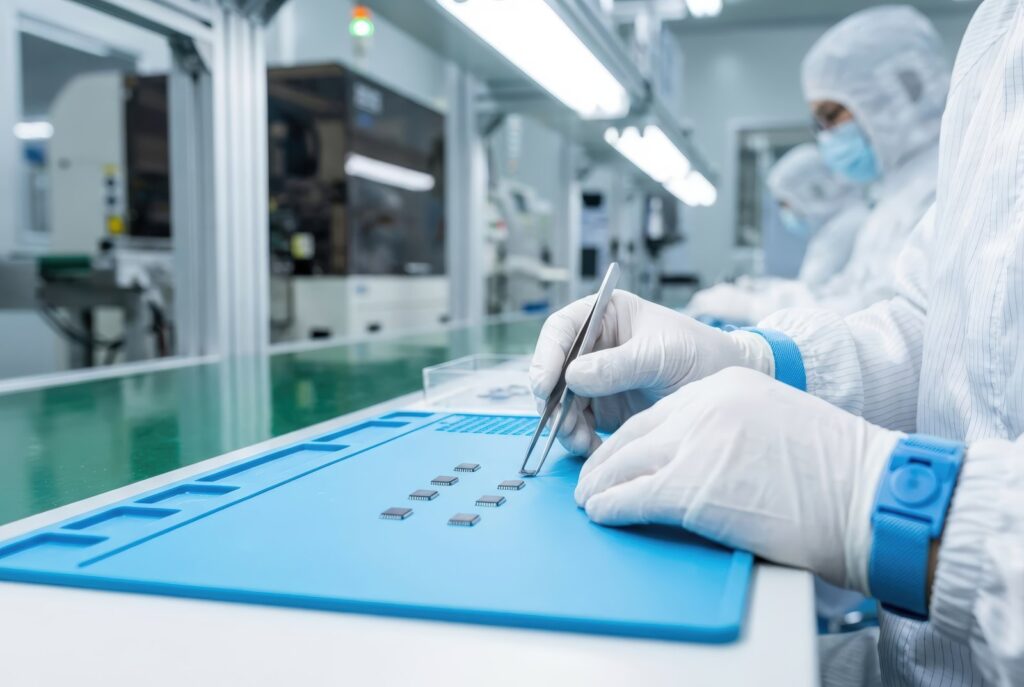
Network storage systems rely on highly sensitive electronic components that operate within tightly controlled environmental conditions. Dust, fibers, and microscopic particles can accumulate over time, particularly in environments with constant airflow and equipment movement.
When contamination accumulates within equipment or facility infrastructure, several operational challenges can arise.
Common risks associated with particulate contamination include:
- Dust accumulation on circuit boards and electronic components
- Air intake obstruction in server and storage equipment
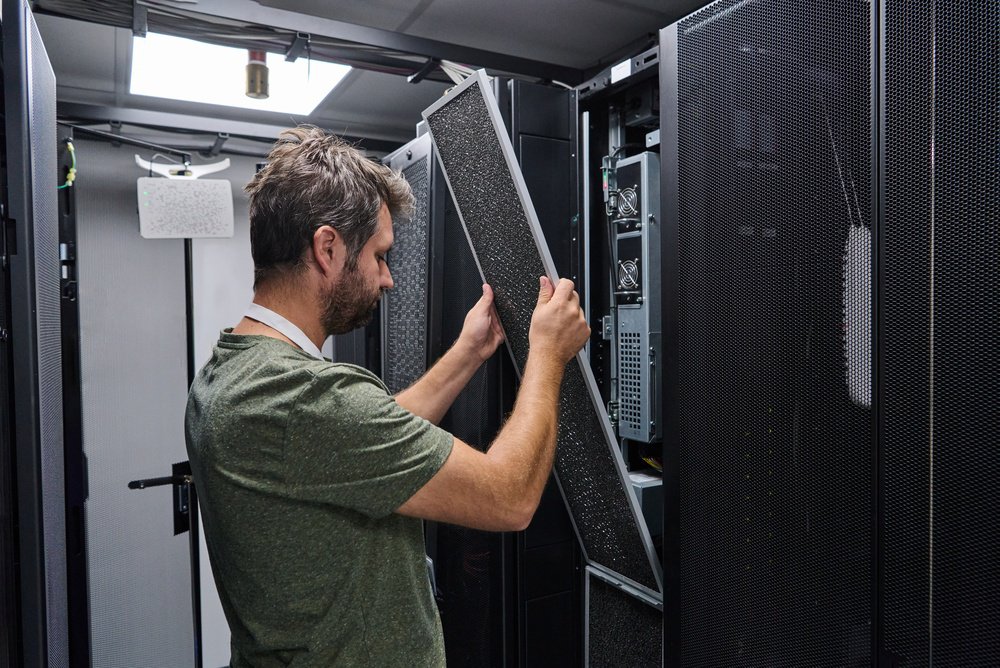
- Reduced cooling efficiency in heat sinks and fans
- Contaminants circulating through raised floor plenums
- Increased risk of electrostatic discharge in sensitive environments
Storage arrays and servers depend on constant airflow to maintain safe operating temperatures. Particulate buildup interferes with that airflow and increases thermal stress on hardware. Over time, elevated temperatures can accelerate component degradation and shorten equipment lifespan.
Maintaining clean environmental conditions helps preserve airflow pathways, supports consistent cooling performance, and protects sensitive electronics.
Understanding Airflow in Network Storage Environments
Cooling systems in modern data centers and storage facilities rely on carefully designed airflow patterns. These patterns guide cool air toward equipment intake points and direct hot exhaust air away from active hardware.
Many facilities implement airflow strategies such as:
- Hot aisle and cold aisle containment
- Raised floor air distribution systems
- Rack-level airflow management
- In-row cooling systems
These designs help separate hot and cold air streams while maintaining consistent cooling throughout the environment. When airflow pathways remain unobstructed, cooling systems operate more efficiently, and equipment temperatures remain within recommended ranges.
However, even well-designed airflow systems can experience performance issues when environmental contaminants accumulate within airflow pathways.
Dust buildup within racks, floor plenums, or cooling units can disrupt airflow balance and limit cooling systems' ability to distribute conditioned air effectively.
How Contamination Disrupts Cooling Performance
Contaminants typically enter network storage environments through everyday operational activities. Foot traffic, building ventilation systems, equipment installation, and maintenance activities all introduce microscopic particles into the facility.
Over time, these particles collect in areas such as:
- Under raised floors
- Cable trays and overhead infrastructure
- Server racks and storage cabinets
- Cooling system intake vents
- Equipment fans and heat sinks
Raised-floor environments are particularly vulnerable to particulate accumulation because airflow systems continuously circulate air through the plenum beneath the floor. Dust and debris can accumulate in these areas and eventually recirculate into the equipment environment.
Accumulated contaminants reduce airflow efficiency and create uneven cooling patterns across racks. Storage hardware exposed to inconsistent airflow may experience higher operating temperatures, placing additional stress on internal components.
Routine environmental maintenance helps prevent contaminants from accumulating in critical airflow pathways.
Environmental Standards for Data Center Cleanliness
Many organizations rely on established environmental standards to maintain appropriate cleanliness levels in critical IT environments. These standards provide guidance on airborne particulate limits, environmental monitoring, and facility maintenance practices.
Two commonly referenced frameworks include:
ISO 14644 Cleanroom Standards
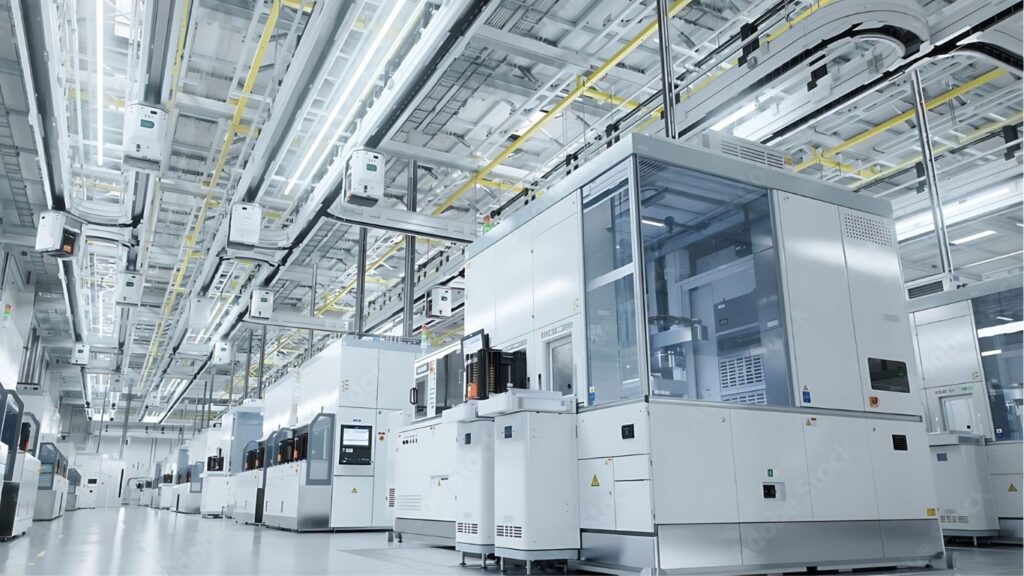
The ISO 14644 standard defines classification systems for airborne particle concentrations in controlled environments. Although most data centers do not operate as full cleanrooms, many organizations align environmental practices with ISO cleanliness classifications to reduce contamination risks.
Maintaining air quality consistent with controlled environments helps support equipment reliability and long-term operational stability.
ASHRAE Environmental Guidelines
The American Society of Heating, Refrigerating, and Air-Conditioning Engineers (ASHRAE) provides environmental recommendations specifically for data centers. These guidelines address temperature ranges, humidity levels, and particulate contamination thresholds suitable for IT equipment environments.
Many storage and data center facilities maintain cleanliness standards similar to those of ISO Class 8 environments to support stable operations.
Best Practices for Maintaining Clean Storage Environments
Environmental maintenance in network storage facilities involves a combination of routine cleaning, monitoring, and contamination control procedures. A structured approach helps reduce particulate accumulation and protects airflow pathways throughout the facility.
Establish a Routine Cleaning Schedule
Regular environmental cleaning helps maintain consistent air quality and prevents contaminants from accumulating in sensitive areas.
Maintenance schedules typically include:
- Routine cleaning of accessible floor areas and surfaces
- Scheduled rack and equipment exterior cleaning
- Periodic underfloor and plenum maintenance
- Inspection and cleaning of cable trays and overhead infrastructure
Facilities with high equipment density or frequent maintenance activity often require more frequent cleaning cycles to maintain environmental stability.
Use Specialized Technical Cleaning Equipment
Critical IT environments require cleaning equipment specifically designed for electronic environments. Standard janitorial equipment can introduce additional contaminants or generate electrostatic discharge risks.
Specialized cleaning tools often include:
- HEPA-filtered vacuum systems designed for clean environments
- ESD-safe cleaning tools and materials
- Microfiber wipes and non-abrasive cleaning products
High-efficiency particulate air (HEPA) filtration systems capture extremely small airborne particles and help maintain stable air quality during environmental maintenance activities.
Maintain Raised Floor and Air Plenum Spaces
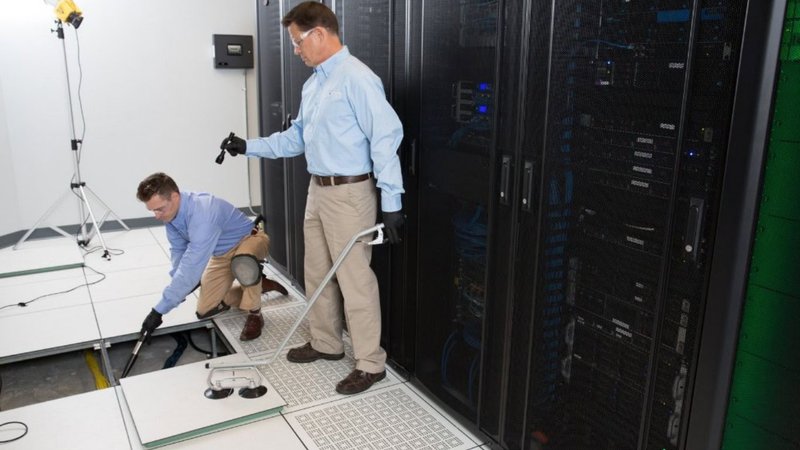
In facilities with raised flooring, the subfloor plenum serves as a critical pathway for the distribution of cooling air. Dust and debris can accumulate beneath the floor panels and gradually interfere with airflow distribution.
Routine underfloor cleaning removes particulate buildup and prevents contaminants from circulating through cooling systems. Maintenance in these areas also supports consistent airflow pressure across the data center floor.
Monitor Environmental Conditions
Environmental monitoring tools help identify changes in air quality, temperature distribution, and airflow patterns.
Monitoring systems may include:
- Particle counters
- Temperature and humidity sensors
- Airflow monitoring devices
- Cooling system performance tracking
Continuous monitoring allows facility operators to detect potential environmental issues early and maintain stable operating conditions for storage infrastructure.
Control Contamination Sources
Reducing the introduction of contaminants into the environment is an important component of long-term environmental management.
Facilities often implement practices such as:
- Controlled access to equipment areas
- Entryway contamination control systems
- Clean staging areas for new equipment installation
- Protective measures during construction or maintenance work
Contamination control practices support overall environmental stability and help maintain optimal airflow performance throughout the facility.
Operational Advantages of Environmental Maintenance
Organizations that maintain structured environmental management programs often experience measurable operational benefits.
Well-maintained environments support:
- Stable cooling performance across storage infrastructure
- Reduced thermal stress on electronic components
- Lower energy consumption within cooling systems
- Improved equipment reliability and uptime
- Extended hardware service life
Cooling infrastructure accounts for a significant share of total energy consumption in many data centers. Maintaining clear airflow pathways and stable environmental conditions contributes to more efficient cooling operations.
Consistent environmental maintenance also supports compliance with industry guidelines and helps organizations maintain predictable system performance.
Supporting Reliable Storage Infrastructure
Network storage systems continue to grow in scale and density as organizations generate larger volumes of digital data. These environments require precise environmental conditions to support stable operations and protect valuable infrastructure investments.
Cleanliness and airflow management play a central role in maintaining reliable storage environments. Facilities that implement structured environmental maintenance practices help protect sensitive equipment, support cooling efficiency, and reduce operational risks associated with contamination.
Organizations responsible for critical IT infrastructure often partner with specialized service providers to maintain these environments.
SET3 provides technical cleaning and environmental maintenance services designed for data centers, network storage facilities, and other mission-critical environments.
Contact SET3 to discuss strategies for maintaining clean infrastructure, protecting airflow systems, and supporting reliable performance across your storage environment.