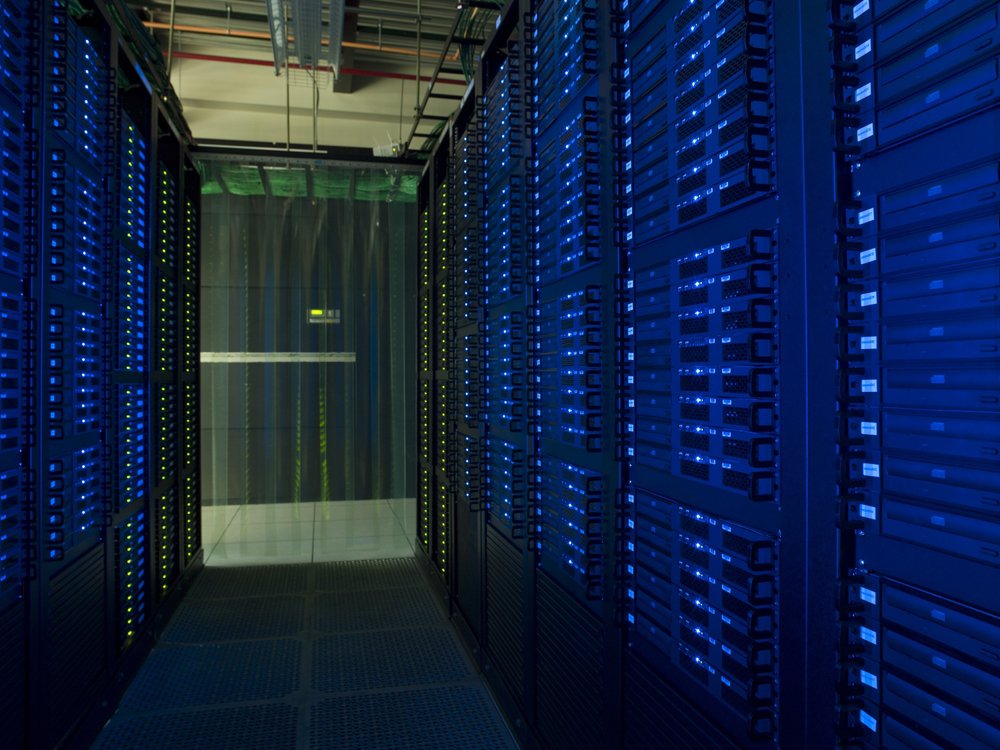
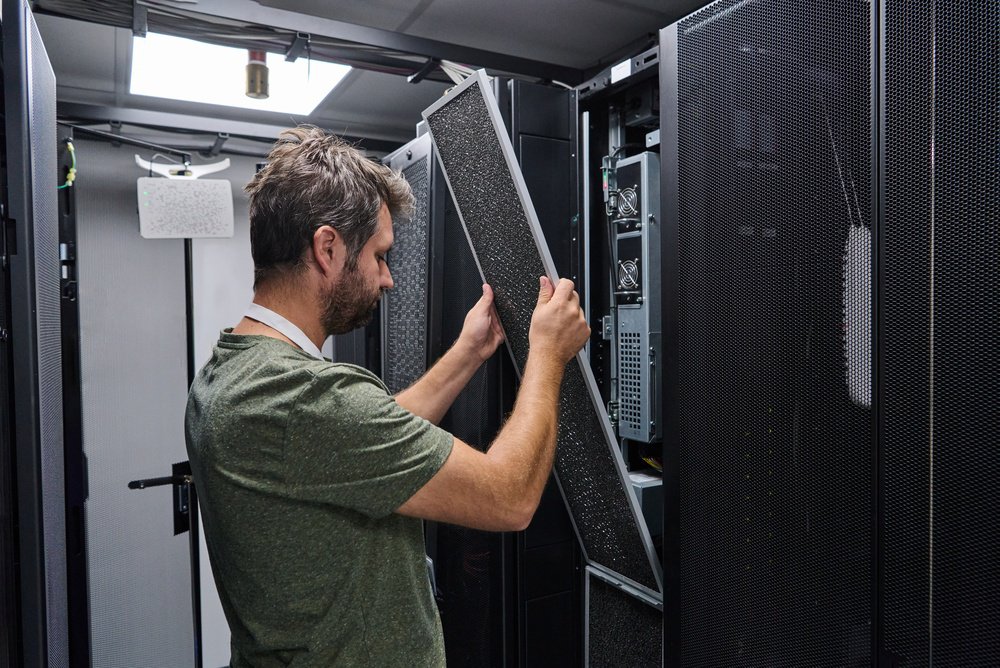
Picture a data center that receives quarterly cleaning service from a vendor it's used for years. The technicians show up, wipe down visible surfaces, run a vacuum through the aisles, and leave a sign-off sheet. There are no particle counts, no before-and-after documentation, and no proof that contamination levels actually dropped. The facility manager signs the sheet, and the cycle repeats. Whether the data center cleaning services meet any real standard is a question no one has formally asked.
That situation is more common than most operators realize. Cleaning vendors vary widely in training, equipment, and compliance knowledge. Without a structured audit, facilities have no reliable way to tell a vendor doing ISO 14644-compliant work from one doing the equivalent of general janitorial service. The two look similar on an invoice and produce very different results.
This guide covers what a sound audit of data center cleaning services involves, what records to require, and what to do when a vendor can't provide them.
What Separates Compliant Data Center Cleaning Services From Surface-Level Work
The most important distinction isn't equipment or frequency. It's methodology. A qualified vendor follows protocols grounded in ISO 14644 and ASHRAE TC 9.9 standards. That means RF-suppressed HEPA vacuums, antistatic chemistry made for sensitive electronics, and particle count checks before and after every service.
Surface-level vendors often use standard commercial equipment that stirs up particles rather than capturing them. They clean visible surfaces only, leaving subfloors, cable trays, and plenum spaces untouched. Their process was never built to meet a compliance standard, so it rarely produces records that would hold up to one. The gap between what they charge and what they deliver isn't always clear until a particle count makes it visible.
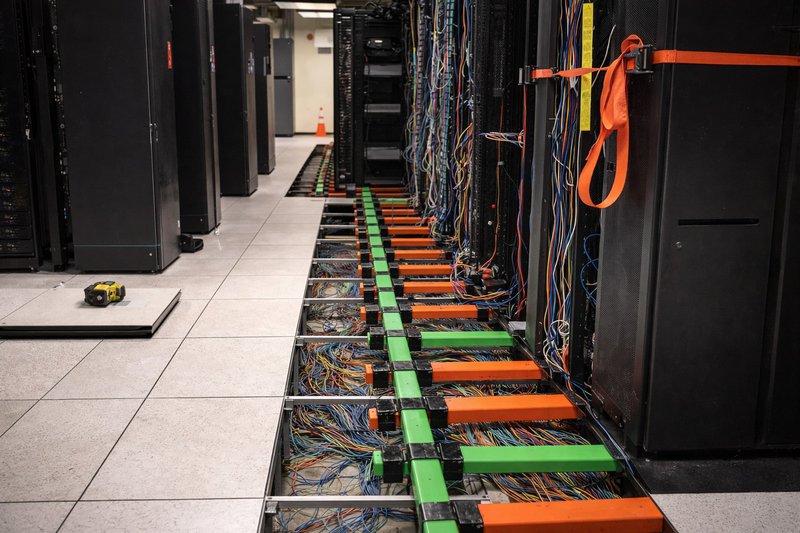
When auditing your current provider, confirm that their scope covers the full facility: raised floor subfloor, ceiling and wall surfaces, cable trays, and rack-level equipment, not just aisles. A vendor who stops at aisle level isn't providing data center cleaning services. They're providing general cleaning in a data center, and that distinction matters.
The Documentation a Qualified Vendor Should Produce
Every legitimate data center cleaning engagement should leave a paper trail. If your current vendor can't produce the following, that's a finding worth acting on.
Particle count reports come first. Before-and-after counts at 0.5 and 5 microns confirm that contamination levels actually changed because of the service. A vendor that skips this step has no way to show results, and your facility has no way to confirm them.
Air quality certification is the next layer. A compliant engagement closes with a report naming the ISO cleanliness class reached and the date it was verified. SET3's data center testing services produce this as standard output, giving facilities a clean audit record after every visit.

Chemical logs confirm that the products used are right for the environment. Antistatic, static-dissipative formulations are the baseline. Standard cleaners can damage components and leave ESD risks that persist long after the crew has left. A vendor who can't name the products applied to your equipment is working without accountability.
Equipment records confirm that tools meet cleanroom-grade specs. HEPA-filtered vacuums, RF-suppressed gear, and non-shedding materials are not optional here. Staff credentials and background check records matter in government and regulated sites, where access may require prior clearance. These details signal whether a vendor's operation is built for critical environments or just adapted from general commercial service.
How to Structure the Audit
A useful audit of data center cleaning services covers three areas: documentation review, on-site observation, and post-service verification.
- Start with documentation before service begins. Request cleaning protocols, equipment certifications, chemical safety data sheets, and sample reports from similar jobs. A vendor who pushes back on this is telling you something worth knowing. Qualified vendors have these records ready because their work was built to produce them.
- On-site observation is the hardest thing to fake. Have someone present who knows what compliant cleaning looks like. Do technicians use the right tools? Also, do they work the subfloor and plenum or just the aisles? Does particle counting happen before work starts? Is proper garb worn throughout? One direct observation cycle often reveals more than a year of sign-off sheets ever would. It also helps to audit on a cycle that doesn't match the vendor's scheduled visit. Showing up outside the expected window removes the chance that the crew has prepared specifically for observation rather than working the way they normally do. Pair that with a review of sign-off sheets from prior visits to see whether their reports are consistent or templated.
- Post-service verification closes the loop. Compare particle counts against the pre-service baseline. Check airflow and temperature readings to confirm that subfloor debris isn't blocking tile flow. SET3's environmental testing services provide third-party verification when facilities need records that hold up to outside review.
Contamination Categories Your Audit Should Cover
Not all data center contamination carries the same risk or calls for the same fix. A solid audit framework breaks them out.
Gross particulate at 5 microns and above is the most visible type. It builds up on raised floors, cable trays, and rack tops and is the main target of routine cleaning.
Fine particulate at 0.5 microns is the bigger operational risk. These particles don't show up to the eye, but they get into server airflow paths and speed up thermal wear and component failure. Clearing them requires Full Service Clean methodology targeting 0.3 microns, not standard vacuuming. SET3's subfloor cleaning services address fine particulate at the plenum level, where it most directly affects airflow performance.
Metallic and carbon contamination, including black dust and zinc needles, calls for a different approach entirely. Black dust is a blend of carbon particles and metal fragments that builds over time and threatens both equipment and staff health. Zinc needles come from aging galvanized steel and need their own remediation plan. Vendors who treat all contamination as one type can't handle either. Facilities without a prior audit often carry two or three of these types at once, each needing a different protocol.
Chemical contamination from fire suppression is a distinct category. Suppression agents release oils and residues that coat surfaces and components and don't come off with routine cleaning. SET3's post-suppression cleaning capabilities handle this directly.
What to Do When Your Current Vendor Fails the Audit
If the audit shows that your data center cleaning services provider lacks records, uses non-compliant tools, or can't confirm particle count improvement, the response depends on how serious the gap is.
Minor gaps may warrant a corrective plan with a firm deadline. Fundamental gaps in methodology, equipment, or expertise typically call for a vendor change. The IEST Recommended Practices for contamination control offer a solid benchmark for what compliant work looks like and what it should document.
Any transition to a new provider should start with a baseline particle count of current conditions. Years of poor cleaning often leave a contamination load that the first compliant service will reveal in the data. That baseline gives your team a real starting point and makes every subsequent report meaningful. Without one, there's no way to tell whether the new vendor is raising the bar or just maintaining what the previous one left behind. Running that baseline assessment before signing a new contract also gives you leverage: a vendor who knows the starting conditions can be held to a documented improvement standard from day one.
To find out whether your current provider meets the standard your facility requires, get in touch with us to get started.