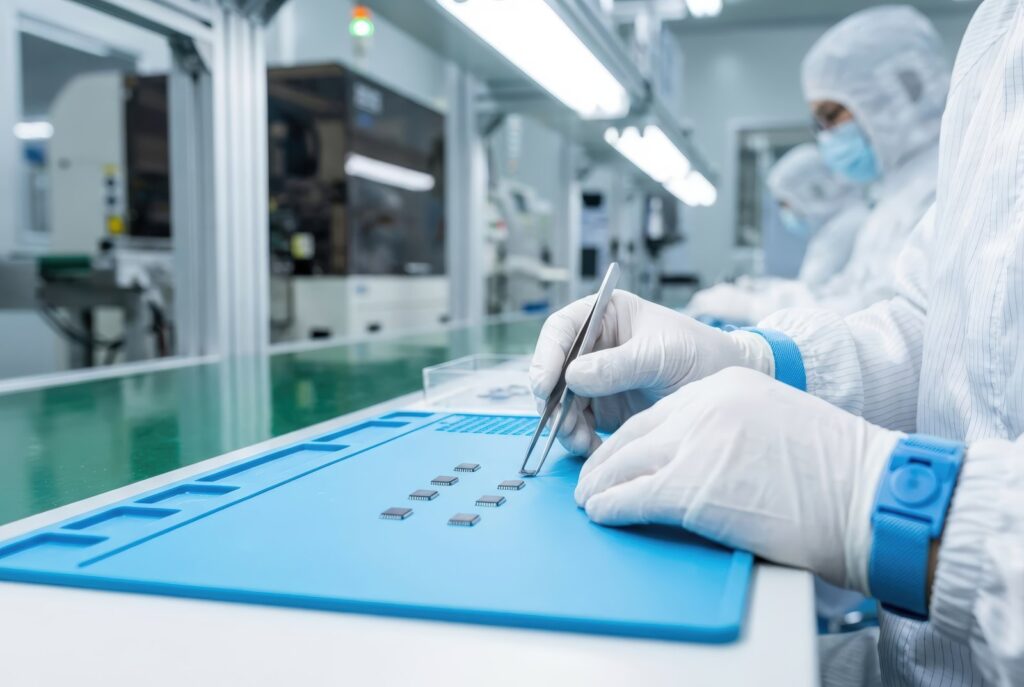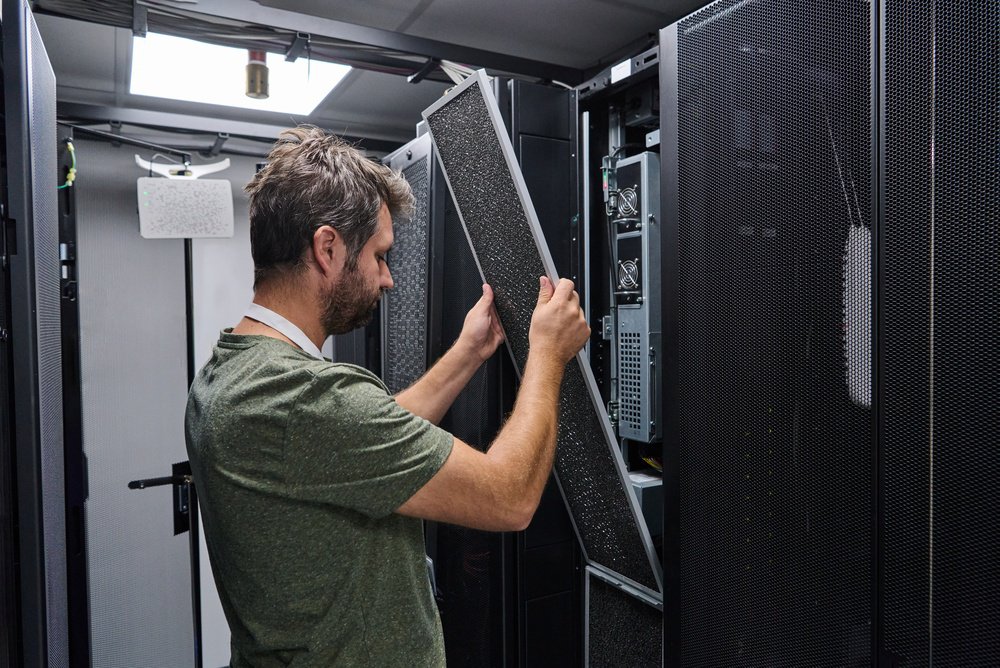

A modern fab lives or dies by contamination control. In 2026, the job isn’t limited to visible dust; it also includes gas-phase chemistry, trace metals, static behavior, and residue management that can show up as yield loss, rework, or tool instability. The most reliable programs treat contamination as a system: define defect types, control them across the facility lifecycle, measure conditions continuously, and document every intervention.
Below is a practical framework General Contractors (GCs), cleanroom managers, and facility teams can use to build a contamination control strategy that stands up to audits and OEM expectations.
- Define the “killer defects” you’re trying to stop
- Treat the cleanroom lifecycle as a “clean continuum”
- Anchor the strategy to 2026 standards and benchmarks
- Implement the “See it, control it” framework
1) Define the “Killer Defects” You’re Trying to Stop with Contamination Control
Start by putting contamination into categories your teams can recognize and act on. Five groups tend to drive the most risk in semiconductor environments:
- Particulates: Microscopic dust, skin cells, and fibers. A common rule in high-sensitivity processes is that any particle larger than roughly half the metal gate pitch can become a fatal defect.
- Airborne Molecular Contamination (AMC): Gas-phase contaminants (ammonia, acids such as HCl/HF, VOCs). These can move through HEPA filtration and still reach wafer surfaces or optics.
- Metal ions: Trace metals (copper, iron) that can migrate into silicon and shift electrical behavior.
- Static discharge and electrostatic attraction (ESD): Static is not a “particle,” but it pulls particles toward the wafer and can also cause immediate circuit failure.
- PFAS and chemical residues: With tighter controls on waste streams and chemical handling, “forever chemicals” and residue profiles are now part of many facilities’ contamination planning. Treat this as a compliance-and-process topic that should be managed with your EHS and waste vendors—not as an afterthought.
What changes in 2026: you can’t run a particles-only plan and call it done. AMC, residues, and static behavior must be built into your controls and monitoring.
2) Treat the Cleanroom Lifecycle as a “Clean Continuum”
A common miss is treating contamination as a post-construction problem. In practice, your controls need to start before the first tool is powered and continue through steady-state operations.
A. Construction and Tool Hook-up
Use clean construction protocols with progressive cleaning. Don’t wait for the punch list to begin HEPA vacuuming. Set a cadence for progressive cleaning as zones are enclosed, utilities are run, and access changes.
Plan equipment moves as contamination events. Large tool installs and retrofits can release years of trapped subfloor dust if lifting and staging aren’t handled correctly. When you’re moving 5,000 lb tools, the lifting plan is also a contamination plan: surface protection, controlled routes, and subfloor controls matter.
B. Operational Discipline
Control human behavior. People are the largest particle source. “Cleanroom behavior” training should be mandatory: slow movements that protect laminar flow, correct gowning order, and rules that prevent shortcuts.
Control consumables. Require:
- Non-shedding, continuous-filament polyester wipes
- Cleanroom-rated anti-static bags and packaging
- Approved chemicals that match surfaces and residue goals
Consumables are easy to overlook—and they quietly decide whether your cleaning work adds particles or removes them.
3) Anchor the Strategy to Latest Standards and Benchmarks
Your contamination control strategy should map to recognized benchmarks so results translate cleanly to audit language and OEM requirements.
| Standard | Focus Area | 2026 application |
|---|---|---|
| ISO 14644-1 (Class 1–5) | Airborne particles | Front-end fab areas often target ISO Class 3 or better |
| ISO 14644-2 | Monitoring & testing | Supports a data-driven quality control system, not occasional checks |
| SEMI F21 | AMC classification | Limits for molecular acids, bases, dopants |
| IEST-RP-CC018.5 | Cleaning procedures | Work instructions for wiping, mopping, and vacuuming without adding particles |
Rule for leadership teams: if a control can’t be tied back to a benchmark, it will be hard to defend during audits or post-event reviews.
4) Implement the “See It, Control It” Framework
A high-tech contamination control strategy runs in two phases: detection and remediation.
Phase 1: Real-Time Detection (“See It”)
In 2026, many facilities are moving from periodic audits to continuous awareness.
- Continuous particle monitoring: Real-time laser counters can flag spikes linked to failing AHU belts, door discipline problems, or contractor activity. That’s faster than finding the issue through yield drift.
- AMC sensing: Deploy sensors for ammonia and VOCs when mask haze or process sensitivity is a concern. AMC can pass through HEPA filtration, so you need direct measurement, not assumptions.
Phase 2: Scientific Remediation (“Control It”)
Once you can see the issue, remediation needs to target reservoirs and root causes.
- Subfloor and plenum cleaning: Raised-floor plenums can behave like a dust lung. Scheduled subfloor decontamination reduces the chance of re-entrainment and recurring events.
- Airflow checks and tool layout validation: Use airflow visualization (smoke testing) to confirm that tool placement and returns aren’t creating dead zones where particles settle.
- Residue removal and disinfection as separate steps: First remove residues with neutral detergents, then apply disinfectants so they can contact the surface instead of sitting on top of films.
Why Partner With a Specialist Like SET3
For GCs and cleanroom teams, the complexity of a 2026 fab is real: mixed defect types, strict benchmarks, and constant change management. SET3 supports controlled facilities with a field-proven approach built around measurement, documentation, and live-site discipline.
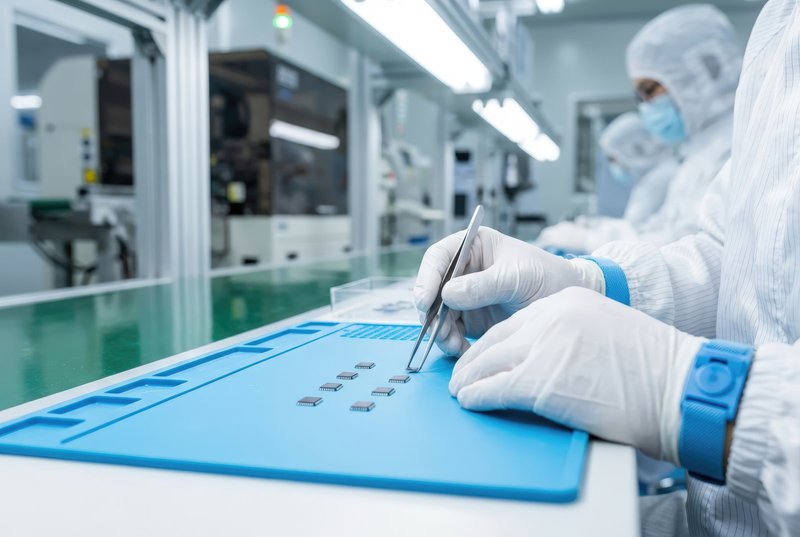
What that looks like in practice:
- Audit-ready documentation: Each session can close out with a Certificate of Cleanliness and supporting particle data for the work area.
- No-downtime mindset: Technicians trained to operate around mission-critical equipment and sensitive areas with tight procedural control.
- Closed-loop support: Services (cleaning/testing) plus access to contamination control products (filters, ESD flooring support, airflow solutions) to keep the strategy consistent over time.
Build a Contamination Control Strategy You Can Defend With SET3
If you’re planning a new build, a tool move, or tightening operational controls, talk with SET3 about a contamination control strategy that ties standards, monitoring, and cleaning methods into one program.