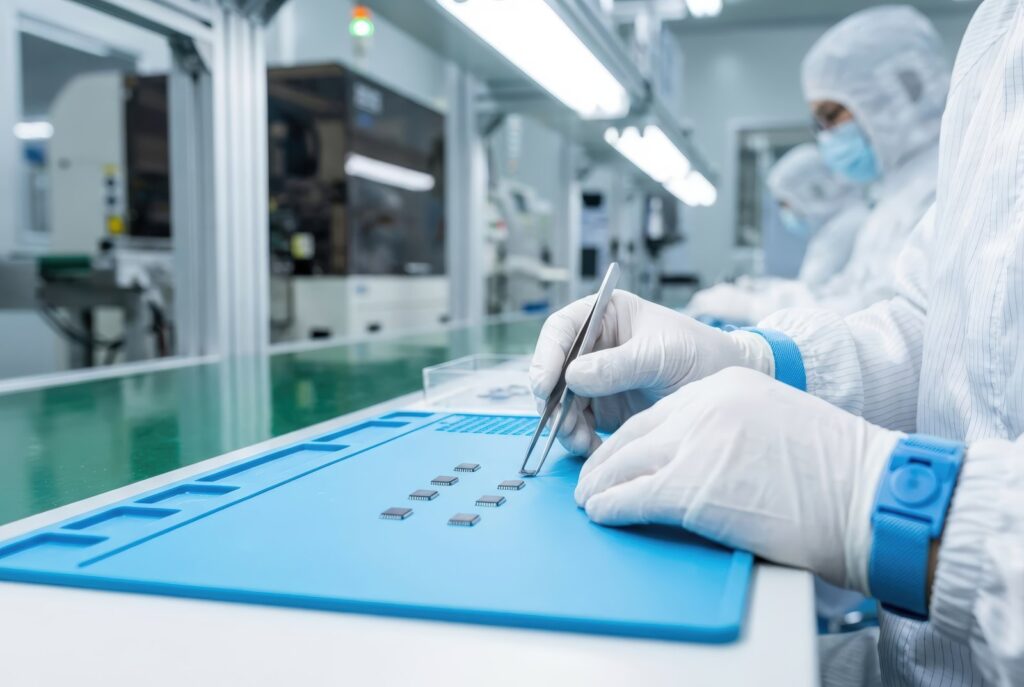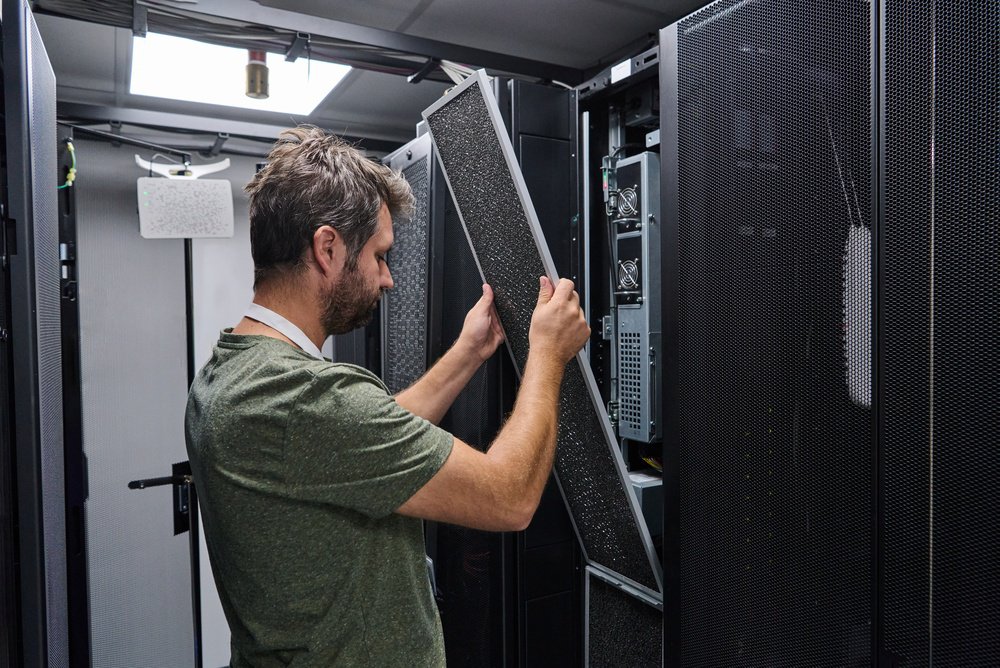
Of all the variables that affect a clean room environment, human activity is the hardest to engineer around. Equipment can be replaced, filters can be upgraded, and airflow systems can be recalibrated. But people introduce contamination in ways that no HVAC specification can fully account for. Every technician, engineer, or visitor who enters a controlled space carries biological and particulate matter on their body, clothing, and footwear.
For facilities operating under ISO 14644 classifications, where particle counts must remain within strict thresholds, understanding how personnel behavior affects contamination levels is a prerequisite to maintaining compliance.
Why Personnel are the Largest Contamination Variable
The human body generates particles constantly. At rest, a person sheds approximately 30,000 skin cells per minute. Physical activity, movement through a space, or even reaching across a workstation pushes that number significantly higher. Across pharmaceutical, semiconductor, and aerospace operations, personnel activity is the most frequently cited root cause when cleanroom excursion events are investigated.
Skin shedding is only one part of the problem. People also introduce contamination through:
- Respiration and speech, which release fine aerosols directly into filtered airstreams
- Hair and eyebrows, which shed continuously even beneath standard headwear
- Cosmetics, lotions, and fragrances, which off-gas compounds that settle on sensitive surfaces
- Paper and personal materials, which release cellulose fibers into conditioned air
All of these sources can be managed. The challenge is that managing them requires consistent behavioral discipline combined with the right physical controls at every stage of the workflow.
The Most Common Ways Personnel Compromise a Clean Room Environment
Personnel-related contamination rarely stems from negligence. It happens because people are continuous particle generators, and without the right controls in place, routine activity becomes a liability. The following scenarios represent the most common ways human presence and behavior compromise a clean room environment.
Entry and Exit Procedures
Entry and exit transitions represent some of the highest contamination risk moments in any clean room environment. Personnel who move too quickly through gowning areas, skip procedural steps, or fail to use contamination barriers at the threshold can introduce significant debris loads before a single task begins.
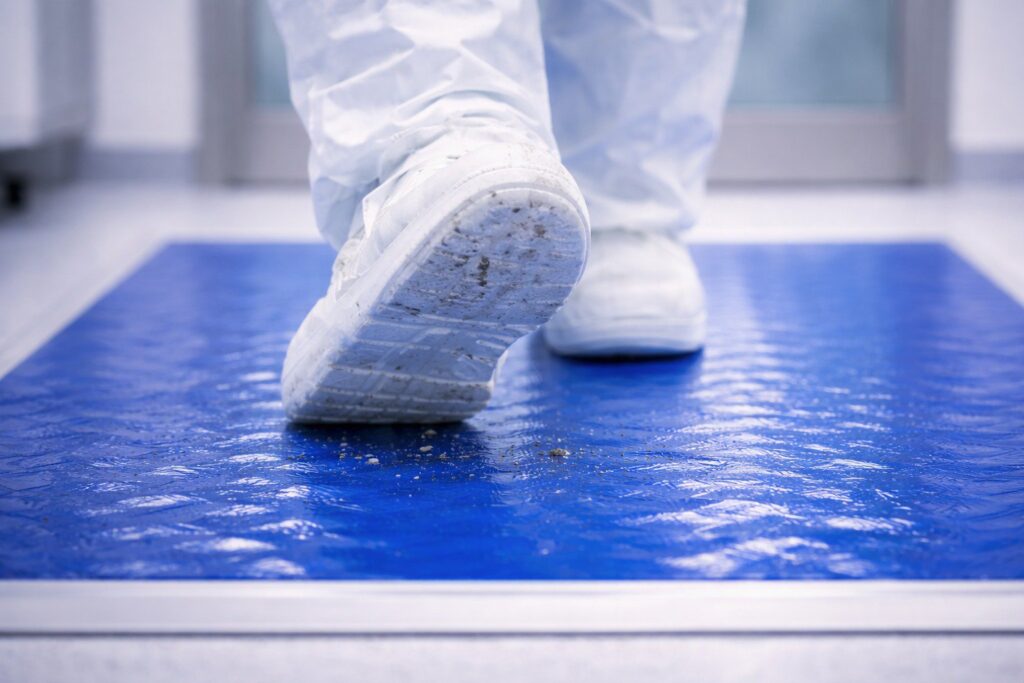
Footwear is one of the most significant entry-point vectors. Shoe soles collect dirt, oils, and particulate matter from standard corridors and outdoor surfaces. Without a physical barrier to intercept that material, personnel carry it directly into the controlled space.
Tacky mats address this problem at the source. Adhesive-surface mats placed at cleanroom entry points capture debris from shoe soles and equipment wheels before they cross the threshold. They are passive, require no power or training to use, and deliver consistent results when properly positioned and maintained at all access points.
Gowning Failures and PPE Compliance
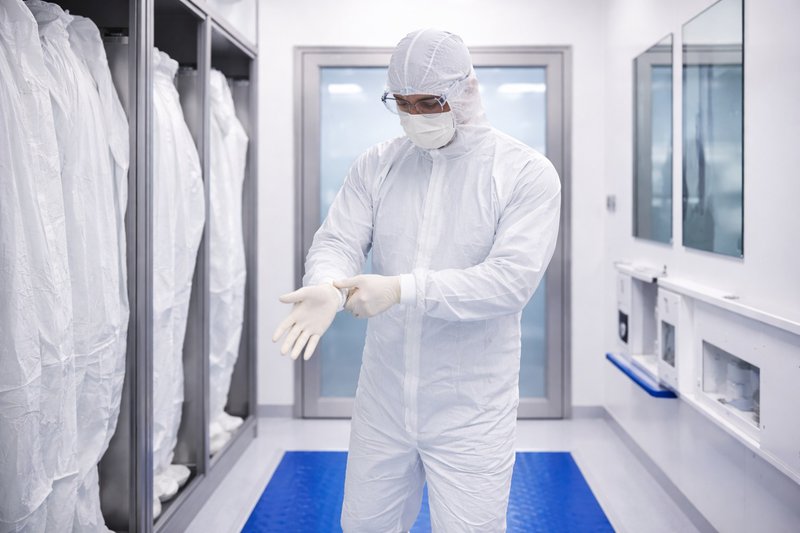
Gowning errors are responsible for a substantial share of preventable contamination events in controlled facilities. Common protocol failures include:
- Donning gloves before a face mask reverses the correct sequence and risks hand-to-face transfer
- Failing to tuck coverall cuffs fully into boot covers, leaving a gap for fiber release
- Reusing disposable garments beyond a single shift
- Wearing poorly fitted suits that allow personal clothing fibers to escape at the collar, wrists, or ankles
Garment material matters as much as technique. Cleanroom suits constructed from low-linting synthetic fabrics shed significantly fewer particles than standard workwear. Facilities that allow personal clothing to show at any opening consistently record higher particle counts during active personnel shifts.
Movement Patterns and Traffic Volume
In a clean room environment, how people move is as important as what they wear. Rapid movement, abrupt reaching, or careless equipment handling disturbs settled particles and disrupts the laminar airflow that filtration systems rely on. Controlled movement practices include:
- Walking at a measured pace through all zones
- Avoiding sudden gestures or sweeping arm movements
- Keeping headcount to the minimum required for the task
- Restricting visitor access and providing movement briefings before entry
Personnel scheduling deserves regular review. Each additional person in a cleanroom adds to the cumulative particle load, and untrained visitors are statistically more likely to move in ways that generate contamination events.
Tool Handling and Surface Contact
Direct contact is one of the more underappreciated contamination pathways in a clean room environment. Even gloved hands can transfer oils, fibers, or chemical residues onto surfaces when proper technique is not followed. Common contact violations include:
- Touching cleanroom walls, ceiling panels, or unprotected surfaces
- Placing unbagged components or materials directly on work surfaces
- Resting tools or equipment on the floor between tasks
Proper material introduction protocols reduce these risks substantially. This includes bagging all components before entry, wiping down equipment with ESD-safe cleaning chemicals at the staging area, and routing all materials through designated pass-throughs rather than carrying them directly from uncontrolled zones.
What Environmental Systems Can and Cannot Do
HVAC infrastructure and filtration systems play a critical role in maintaining a clean room environment, but they are not a failsafe. HEPA and ULPA filters capture the majority of airborne particles under normal operating conditions. Under sustained or severe contamination input, particularly from a single improperly gowned technician during a sensitive production step, the local air exchange rate can be overwhelmed.
Effective contamination control depends on multiple layers working together:
| Layer | Function |
|---|---|
| Physical barriers (tacky mats, air showers) | Intercept contaminants before they enter the space |
| Gowning protocols | Minimize human-sourced shedding inside the environment |
| HEPA/ULPA filtration | Remove airborne particulate from circulation |
| Personnel training | Reduce behavioral sources of contamination |
| Environmental monitoring | Detect particle count changes before they escalate |
Each layer compensates for gaps in the others. Removing or deprioritizing one increases the load on the rest, and the risk of an excursion event climbs accordingly.
Monitoring, Documentation, and Accountability
Maintaining a compliant clean room environment over time requires more than a written procedure manual. Facilities that achieve the most consistent results connect environmental monitoring data directly to personnel activity records. When a particle count excursion is logged, the ability to cross-reference who was present, what tasks were performed, and when entry and exit occurred makes root cause analysis far more actionable.
Air quality testing and certification establishes the baseline particle counts needed to detect degradation before it becomes a compliance failure. Without regular certified testing, contamination events can go undetected until they surface as production losses or regulatory findings.
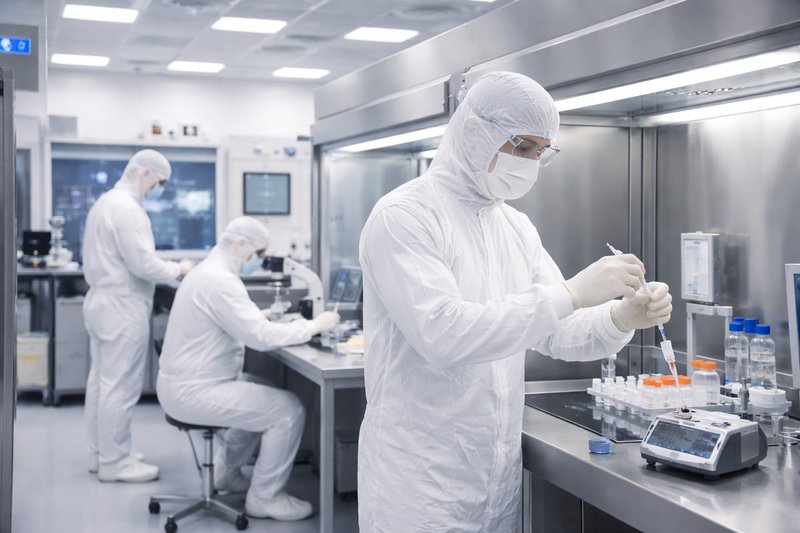
Training programs should be treated as ongoing operations rather than one-time onboarding. Sustained compliance depends on:
- Linking refresher training to monitoring outcomes, particularly after any documented excursion
- Showing personnel the data that connects their behavior to particle count results
- Running periodic gowning audits rather than relying on assumed adherence
- Logging all personnel activity in sensitive zones to support traceability and investigation
Tacky Mats as a Frontline Control Measure
Tacky mats are among the most practical and cost-effective tools for protecting a clean room environment at the point of entry. Properly placed adhesive mats capture shoe-borne and wheel-borne debris before it crosses the threshold, with no power requirements, no installation complexity, and no need for specialized training.
Their effectiveness depends on correct placement and consistent upkeep:
- Place mats at every access point, not just the primary entry. Secondary doors, equipment staging areas, and service corridors are common gaps.
- Peel adhesive sheets regularly. A fully loaded surface stops capturing particles and provides little more protection than bare flooring.
- Size mats appropriately for the zone. Standard entry mats work well for personnel; wider formats are needed for equipment transfer areas.
SET3's tacky mat collection covers both personnel entryways and wider equipment transfer zones, ensuring no entry vector is left unaddressed.
Building a Personnel-Aware Contamination Control Program
A well-functioning clean room environment does not happen by accident. It results from deliberate program design that accounts for human behavior alongside technical infrastructure. Personnel will develop habits, take shortcuts under pressure, and adapt to routines in ways that gradually erode contamination discipline if no structure exists to prevent it.
Facilities that treat contamination control as purely a filtration and HVAC problem consistently fall short of those that address it as an operational discipline. Every person entering the space influences particle counts. The goal is to build a program where that influence is consistently positive rather than a recurring source of excursion events.
SET3 works with cleanroom and data center operators to evaluate existing contamination control programs, identify personnel-related vulnerability points, and implement targeted solutions across both the physical and procedural dimensions of the challenge. Contact SET3 today to schedule a consultation with our critical environment specialists.