Fire suppression systems are essential safeguards inside critical infrastructure environments. In data centers, these systems are designed to extinguish fires rapidly while minimizing damage to sensitive equipment. However, when a data center fire suppression system is discharged, the event can introduce contamination risks that are often overlooked.
While suppression agents are engineered to protect equipment from fire, the release process can leave behind residues, oils, and other contaminants that spread throughout the facility. These substances may settle on infrastructure surfaces, accumulate in airflow pathways, or become trapped beneath raised flooring systems.
Without proper post-incident cleaning and environmental assessment, this hidden contamination can affect equipment reliability and long-term facility performance.
What Happens During a Data Center Fire Suppression Release
A data center fire suppression system typically relies on clean agents or specialized chemical compounds designed to extinguish fires without exposing equipment to large volumes of water. These agents suppress flames either by reducing oxygen concentration in the immediate area or by interrupting the chemical chain reaction that sustains combustion.
While the suppression agent itself is formulated to be safe for electronic equipment, a discharge event can disturb contaminants already present in the environment.
During a release, the rapid discharge of gas and the resulting air movement can dislodge materials that have accumulated throughout the facility, including:
- Dust and particulate matter
- Lubricant residues associated with equipment maintenance
- Oils present in mechanical components
- Airborne particles settled within cooling systems and airflow pathways
Once disturbed, these contaminants can redistribute throughout the space and settle on equipment racks, cable pathways, and airflow plenums. In sensitive IT environments, this secondary contamination can affect cooling performance, equipment reliability, and overall environmental stability.
Disaster Recovery: Hidden Contamination After Fire Suppression Discharge
The primary objective during a fire suppression event is to extinguish the fire and protect the facility. Once the system completes its discharge, operational priorities typically shift toward stabilizing equipment and restoring services as quickly as possible.
However, the discharge process can leave contaminants inside the environment that require attention during disaster recovery.
Common materials that may remain in the facility include:
- Oils released from nearby mechanical systems
- Residues associated with suppression agents
- Disturbed dust and particulate matter
- Contaminants are redistributed through airflow and cooling systems
Many of these substances are not immediately visible. Particles and residues can settle across equipment surfaces, accumulate beneath raised flooring systems, and circulate through ventilation pathways.
In critical IT environments, this type of contamination can interfere with airflow performance, settle on sensitive electronic components, and affect overall environmental conditions. Proper assessment and remediation are important steps in restoring a stable operating environment after a suppression event.
Airflow Systems
Cooling airflow used to maintain equipment temperatures can carry particles throughout the data center. Contaminants released during a suppression event may enter these airflow pathways and circulate through equipment racks.
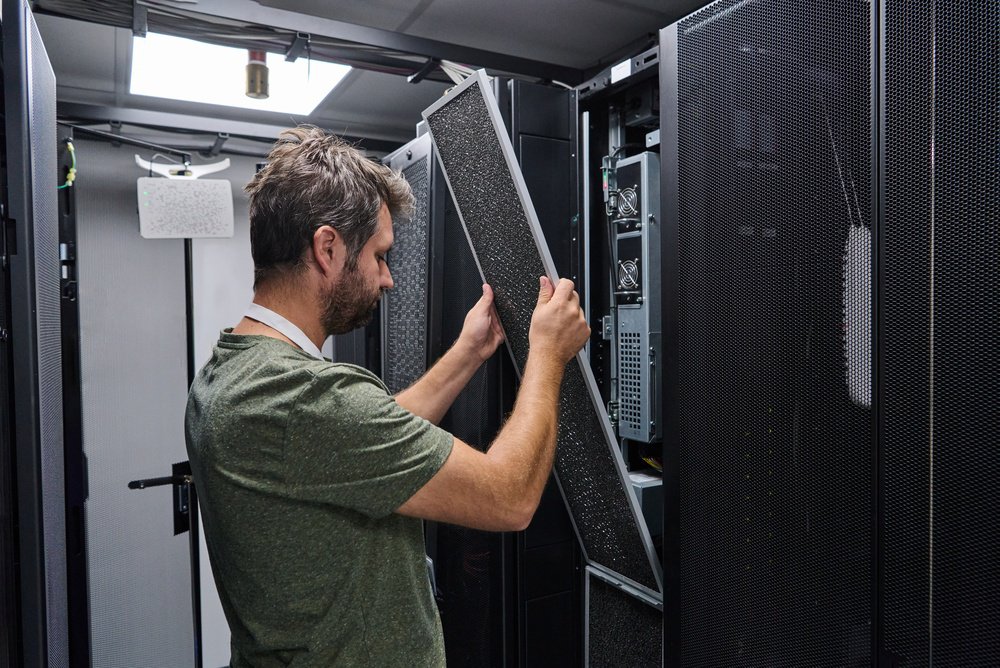
In some cases, particles can accumulate inside fan assemblies or cooling systems, affecting airflow efficiency.
Subfloor Environments
Many facilities use raised flooring systems to distribute cooling air and route cabling. When contaminants enter this subfloor space, they can accumulate beneath equipment racks and within the plenum.
Facilities often rely on subfloor cleaning services to remove contamination that accumulates in these hidden areas and restore proper airflow.
Overhead Infrastructure
Particles and residues can also settle above equipment in ceiling plenums and overhead cable trays. If these areas are not cleaned, contaminants may later re-enter the environment as airflow changes during normal operations.
In some facilities, maintenance teams address these risks through services such as ceiling plenum cleaning to ensure overhead environments remain free from contamination.
Disaster Remediation: The Risk of Oils and Toxic Residues
One of the less recognized consequences of a fire suppression release is the redistribution of oils and other potentially harmful materials that may already be present in the environment. The rapid discharge of suppression agents can disturb substances that have accumulated over time, allowing them to spread throughout the facility.
These materials can originate from several sources, including:
- Lubricants used in mechanical systems and moving equipment
- Residues from equipment manufacturing or installation processes
- Contamination introduced during maintenance or repair activities
- Chemical reactions between suppression agents and existing materials in the environment
Once dispersed, these substances can settle on equipment surfaces or migrate into sensitive infrastructure components such as cable pathways, airflow plenums, and electronic assemblies.

Even small amounts of residue can present reliability concerns. Contaminants that settle on electrical contacts, cooling pathways, or circuit components can interfere with proper system operation and contribute to long-term performance issues in the data center.
Why Post-Incident Remediation and Cleaning Is Critical
After a data center fire suppression event, restoring equipment operation is often the immediate priority. However, bringing systems back online without evaluating environmental conditions can leave contamination issues unresolved.
A structured post-incident cleaning process helps address contaminants that may have been introduced or redistributed during the suppression release. Residues, disturbed particles, and oils can settle throughout the facility and may affect equipment surfaces, airflow pathways, and other sensitive infrastructure areas.
Specialized cleaning and remediation procedures in mission-critical environments often include:
- Removal of surface contamination from equipment racks and surrounding infrastructure
- Cleaning and inspection of raised floor environments and subfloor plenums
- Assessment and cleaning of airflow pathways and cooling system components
- Removal of dust and residue from overhead infrastructure, including cable trays and support structures
Facilities responsible for critical IT operations frequently rely on technical cleaning methods designed specifically for controlled environments. These approaches focus on contamination control, proper handling of sensitive equipment areas, and the maintenance of environmental stability throughout the disaster recovery process.
Addressing contamination after a suppression event helps restore environmental conditions and supports the continued reliability of data center infrastructure.
Disaster Recovery Analysis: Why Residues Can Remain Hidden in Critical Infrastructure
After a data center fire suppression event, contamination is not always visible during a standard visual inspection. Many residues introduced during a suppression discharge settle in areas that are difficult to access during routine maintenance.
For example, oils and particles disturbed during the event may accumulate inside cable trays, beneath raised flooring panels, or within airflow pathways used to cool equipment racks. Because these areas are not part of everyday operational inspections, contamination can persist long after the suppression system is triggered.
This hidden contamination can slowly affect infrastructure reliability. Residues that settle on electronic surfaces may interfere with sensitive connections, while particles that accumulate in airflow pathways can reduce cooling efficiency.
For this reason, post-incident environmental assessments are an important step in restoring safe operating conditions following a data center fire-suppression release.
Environmental Restoration After Fire Suppression Events
Restoring a controlled environment after a fire suppression event requires more than restarting equipment. Facilities must ensure that contaminants introduced during the discharge have been removed from both visible surfaces and hidden infrastructure spaces.
Environmental restoration procedures often include detailed inspections of subfloor spaces, overhead plenums, and airflow pathways throughout the facility. These areas can accumulate contaminants during suppression events and may require specialized cleaning procedures to safely remove residue.
Facilities may also review environmental monitoring results to confirm that particle levels remain within acceptable limits before returning systems to full operation.
Organizations responsible for mission-critical environments often implement structured environmental maintenance procedures to ensure that a data center fire-suppression release does not pose long-term contamination risks.
Remediation of Infrastructure Conditions After a Fire Suppression Event
Data center fire suppression systems are essential for protecting facilities from catastrophic damage, but the environmental impact of a suppression discharge should not be overlooked. Oils, chemical residues, and redistributed particles can remain in the facility long after the event, potentially affecting sensitive infrastructure and overall system performance.
Proper environmental restoration following a suppression event helps remove these contaminants and return the space to safe operating conditions before normal operations resume. Without thorough contamination control, lingering residues and particles may continue to pose risks to equipment reliability and operational stability.
Whether you are preparing for a potential suppression event or addressing post-incident contamination, connect with SET3 to discuss strategies that help protect your data center environment and maintain safe operating conditions.