Relocating equipment inside a data center environment requires careful planning, as even minor mistakes can damage sensitive infrastructure. Servers, storage arrays, and networking systems are densely packed into racks and connected through complex cabling and power systems. Because of this complexity, many organizations rely on specialized data center movers to handle relocation safely and efficiently.
However, traditional relocation methods are not always the most effective approach. In many cases, live server rack lifting services provide a safer, faster, and significantly more cost-efficient alternative. Understanding when to use traditional movers versus live rack lifting is essential for minimizing risk, reducing costs, and maintaining operational continuity.
Why Data Center Equipment Relocation is Complex
Data centers support continuous operations that often cannot tolerate downtime. Relocating equipment requires disconnecting, transporting, and reinstalling hardware without introducing errors or damaging components. Traditional data center movers typically power down systems, remove hardware from racks, and relocate individual components.
While this method can be effective, it introduces several risks, including increased handling of sensitive equipment, a higher likelihood of cabling errors, extended downtime, and additional labor for reinstallation. These challenges make it critical to evaluate whether full equipment removal is necessary for the relocation.
The Limitations of Traditional Data Center Movers
Traditional relocation methods often involve significant operational disruption. Powering down systems can interrupt business operations, while removing and reinstalling equipment increases the chances of misconfiguration or hardware damage. Post-move testing and cable management also add time and cost to the project.
In many cases, this approach is more resource-intensive than necessary, particularly for moves within the same facility. Organizations may end up paying more in labor, downtime, and risk mitigation than the relocation itself.
A More Efficient Approach: Live Server Rack Lifting Services
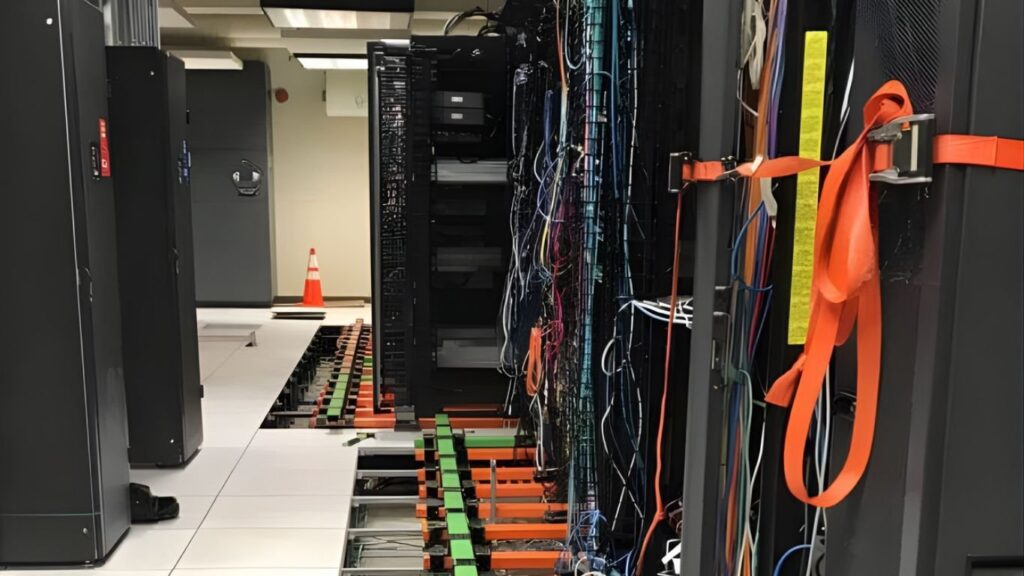
Live server rack lifting services are designed to relocate fully populated racks without removing equipment or powering down systems. This approach maintains cabling integrity and avoids the need for disconnection, transport, and reinstallation of individual components, which are typically required in traditional relocation methods. As a result, it reduces the amount of physical handling involved and helps maintain existing system configurations during the move.
In terms of cost and operational impact, live rack lifting is generally 5x to 10x less expensive than traditional relocation, largely due to reduced labor requirements, minimal reinstallation work, and the absence of downtime-related costs. Because systems remain operational throughout the process, this method is commonly used for intra-facility moves where maintaining continuity and minimizing disruption are key considerations.
Key Considerations When Evaluating Relocation Strategies
Selecting the appropriate relocation approach involves evaluating both operational requirements and infrastructure constraints. While traditional data center movers are still necessary in some scenarios, alternative methods such as live rack lifting are often considered for intra-facility moves where maintaining system continuity is a priority.
Key factors to consider include:
- Downtime tolerance and operational impact – Whether systems can be powered down and for how long, including the business impact of any interruption
- Cabling and rack complexity – The density and configuration of cabling, which affects the difficulty and risk of disconnecting and reconnecting equipment
- Relocation distance within the facility – Short-distance moves may support rack lifting, while longer or multi-room moves may require traditional methods
- Equipment sensitivity and risk tolerance – The level of acceptable handling, vibration, and potential for configuration errors during relocation
- Total project cost – Including labor, reinstallation, testing, and any costs associated with downtime or operational disruption
Assessing these factors provides a clearer understanding of the operational, technical, and financial implications of each approach. It allows teams to identify potential risks, evaluate feasibility given infrastructure constraints, and select a relocation method that aligns with system requirements, minimizes disruption, and supports a controlled, efficient move.
Maintaining Environmental Control During Relocation
Relocation activities can introduce environmental risks, particularly through dust and debris that may circulate through airflow systems or settle on equipment. These contaminants can impact cooling performance and long-term reliability if not properly managed.
To maintain controlled conditions, facilities often perform preparatory steps, such as subfloor cleaning and clearing airflow pathways, prior to relocation. Keeping the environment clean during the move helps protect sensitive hardware and ensures stable operating conditions throughout the process.
When Traditional Data Center Movers Are Still Needed
While live rack lifting is ideal for many scenarios, traditional data center movers remain necessary for certain types of relocation. Moves that involve transporting equipment between facilities or across long distances typically require hardware to be removed and securely packaged for transit.
In these cases, experienced movers play a critical role in protecting infrastructure. They use specialized handling procedures to minimize vibration, coordinate logistics, and ensure equipment is safely transported and reinstalled in the new location.
Supporting Safe, Cost-Effective Relocation
Relocating data center equipment requires balancing operational continuity, cost efficiency, and infrastructure protection. While traditional data center movers have long been the standard, live server rack-lifting services present a more efficient option for many internal relocation projects.
Live rack lifting minimizes equipment handling, avoids system downtime, and reduces overall project costs compared to traditional methods. When supported by proper planning and environmental control, it provides a practical approach to maintaining system stability during relocation.
SET3 provides specialized expertise in live rack lifting, airflow management, and data center infrastructure services. Reach out to SET3 to discuss relocation strategies that align with your operational requirements and infrastructure goals.