Maintaining a certified sterile room is a continuous, structured commitment that demands discipline at every level of operations. For facilities operating under ISO 14644 classifications, FDA 503 standards, or ASHRAE guidelines, the cost of lapses in daily protocol is measured not just in compliance violations but in compromised products, equipment failures, and lost operational continuity. A contaminated sterile room does not always look different. It simply performs differently, and often at the worst possible time.
This guide walks through what a rigorous daily maintenance protocol for a sterile room looks like in practice, from the moment personnel arrive to the final verification at end of shift.
Pre-Entry Procedures: The First Line of Defense
Every contamination event in a controlled environment has a source, and personnel consistently rank among the highest contributors of particulate matter. A structured gowning and decontamination sequence before anyone enters the sterile room is not optional. It sets the standard for everything that follows.
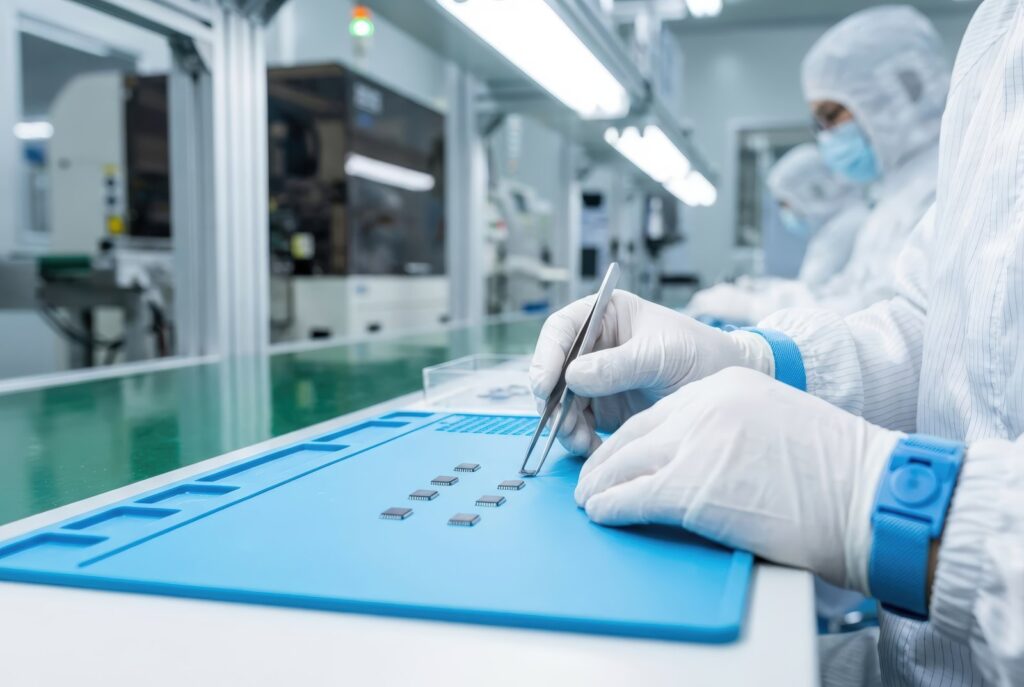
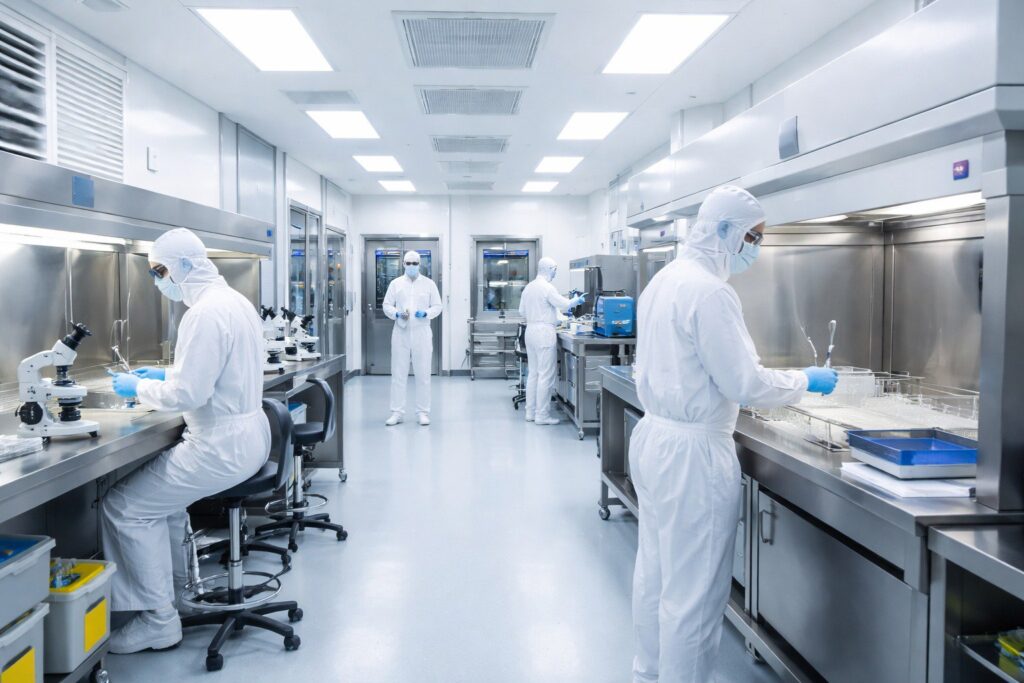
Gowning requirements vary by ISO classification, but a typical protocol for ISO Class 5 or cleaner environments includes:
- Sterile gloves donned last, after all other garments are in place
- Full cleanroom suit or coverall, inspected for tears or contamination before use
- Boot covers or dedicated cleanroom footwear
- Face mask and hair cover, including beard covers where applicable
- Safety glasses or goggles if chemical agents are in use
Additional pre-entry controls include:
- Tacky mats at every entry point to capture particulates from footwear. Inspect and replace these each morning, and again mid-shift if traffic is heavy.
- An air shower, if installed, should run its full cycle before personnel proceed. Do not override or rush this step.
- Any materials or equipment brought into the sterile room must be wiped down with an approved agent in the anteroom before crossing the threshold.

Personnel gowning errors are among the most common causes of sterile room contamination findings during audits. SET3's cleanroom compliance consulting can help facilities identify gaps in gowning procedures and build corrective action plans before inspectors do.
Daily Surface Cleaning: Top Down, Outside In
Surface cleaning in a sterile room follows a strict order: ceilings and wall junctions first, then workstations and equipment surfaces, then floors. Contamination introduced to higher surfaces will settle onto lower ones, so reversing this order creates rework and risk.
Cleaning agent rotation is a daily concern, not an annual one. Using the same disinfectant repeatedly can allow resistant microbial strains to survive. A validated daily protocol typically incorporates:
- A sporicidal agent for high-contact and high-risk surfaces
- A 70% isopropyl alcohol wipe-down for general surfaces and equipment
- An ESD-safe or antistatic solution in areas with sensitive electronic components or semiconductor materials
Wipe technique matters as much as the agent used:
- Use lint-free, single-use cleanroom wipes only. Standard cloths shed fibers that accumulate on surfaces and within air handling systems.
- Apply cleaning agents using overlapping, unidirectional strokes. Random or circular wiping patterns recontaminate already-cleaned areas.
- Pre-wet wipes to the correct saturation. Dry wiping redistributes particles. Oversaturated wipes introduce excess moisture.
Surfaces that require individual attention and cleaning logs each day include:
- Workstations and benchtops
- Pass-throughs and transfer hatches
- Biosafety cabinets and laminar flow hoods
- Door handles, light switches, and other high-touch points
- Wall and floor junctions, which tend to accumulate particles and are often overlooked
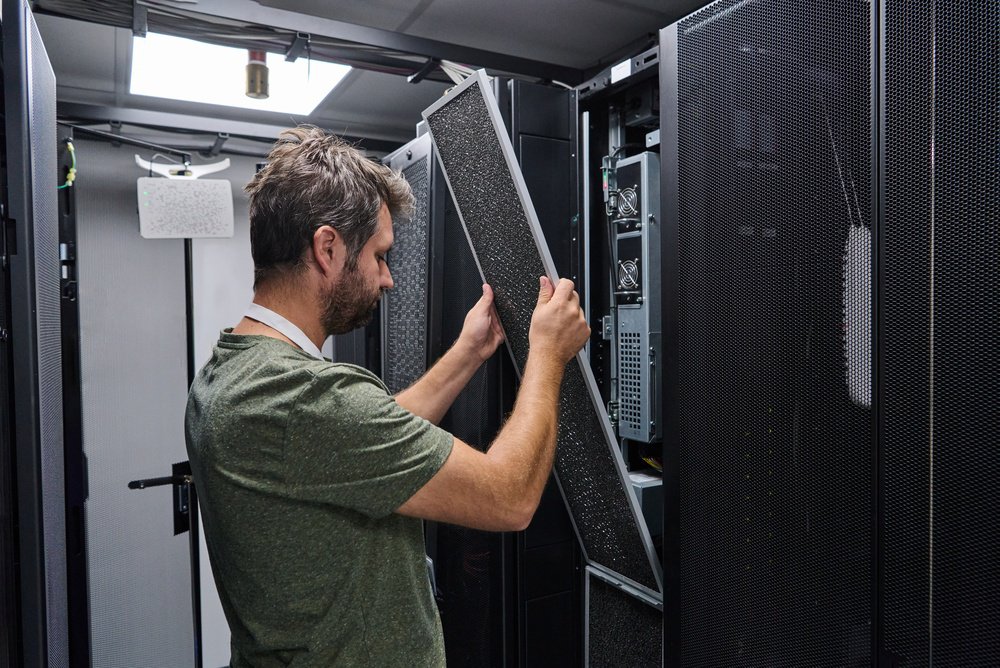
For facilities managing both sterile room compliance and data center environments, surface cleaning protocols extend beneath raised floors as well. Subfloor cleaning and plenum decontamination carry the same contamination consequences as poorly maintained cleanroom surfaces.
Air Quality Monitoring: Real-Time Data, Not Annual Reports
Particle counting is not a certification event that happens once a year. In an active sterile room, it is a daily operational function that should occur at the start of each shift and at defined intervals throughout the day.

ISO 14644-1 defines the maximum allowable airborne particle concentrations for each cleanroom class. These limits should be posted visibly within or adjacent to the sterile room, and all monitoring results should be logged against them in real time.
Key air quality monitoring practices for daily operations:
- Conduct baseline particle counts at the start of each shift before personnel begin work
- Sample at designated locations, not at random. ISO 14644-2 governs the ongoing monitoring program and specifies minimum sampling requirements.
- If counts exceed threshold at any location, halt operations, investigate the source, re-clean the area, and verify before resuming
- Visually confirm that supply air diffusers and return air grilles remain unobstructed at each daily walkthrough. Even partial blockage disrupts laminar airflow and creates contamination risk.
- Record differential pressure readings between the sterile room and adjacent spaces. A loss of positive pressure is an immediate corrective action trigger.
Continuous environmental monitoring systems offer advantages over manual periodic sampling, particularly in ISO Class 5 or cleaner environments where contamination events can occur without visible warning. SET3's testing and certification services include air particle counts, airflow analysis, humidity checks, and contamination inspections aligned with ISO 14644, ASHRAE, and IEST standards.
Equipment Cleaning: Validated Procedures, Every Time
Any equipment used within a sterile room requires cleaning at the start and end of each operational period. This includes production machinery, hand tools, carts, tablets or documentation materials, and any items transferred into the space during the shift.
A validated equipment cleaning procedure specifies:
- The cleaning agent, its concentration, and how it is applied
- The contact time required before wiping or rinsing
- The wipe application method (typically unidirectional, overlapping strokes)
- Which surfaces are considered critical and require additional attention
Substituting agents or skipping contact times, even with good intentions, can void validation records and create compliance findings during audits. Every deviation must be documented and reviewed.
For facilities where large equipment must be repositioned or serviced without shutting down operations, advanced lift platforms can raise server racks or heavy infrastructure without system interruption. AirWolfX, SET3's sister brand, provides a patent-pending riser platform that lifts active, high-density equipment so floor maintenance can proceed with zero downtime, which is a significant operational advantage in both sterile environments and live data centers.
Documentation: The Compliance Record That Protects Your Facility
Every cleaning action, particle count reading, personnel entry, gowning verification, and equipment introduction must be logged. Regulators and auditors reviewing a facility's compliance history look for records that are consistent, complete, and traceable. Gaps in documentation, even when the actual work was performed correctly, signal a poorly managed environment.
A daily maintenance log for a sterile room should capture at minimum:
- Date and time of each cleaning cycle
- Cleaning agents used, including lot numbers and dilutions
- Personnel who performed and independently verified the task
- Particle count readings at all designated sample points
- Differential pressure readings at the start and end of each shift
- Any deviations observed and the corrective actions taken
When a corrective action entry is required, it should include:
- A description of what was observed and when
- The immediate action taken to contain or resolve the issue
- The root cause, where determinable
- Preventive actions to reduce recurrence
Corrective action documentation is often what separates a written warning from a finding that is resolved during inspection. It demonstrates that the facility's quality system is functioning, not just the cleaning schedule.
End-of-Day Procedures: Returning the Room to Baseline
The final phase of a daily maintenance protocol returns the sterile room to its baseline state so operations can resume cleanly the following day.
End-of-day tasks include:
- A final surface wipe-down of all work areas using approved agents
- Disposal of all single-use cleaning materials in designated, labeled waste streams
- Terminal disinfection of high-contact surfaces with a sporicidal agent
- Removal of all waste, packaging, and materials not permanently stationed in the room
- Covering of equipment that will remain overnight with sterile drapes or bags where applicable
Air handling systems should remain operational during unoccupied periods. Shutting them off allows particle levels to rise, and recovery to a classified state can take extended time before the next shift begins. A final particle count reading taken after cleaning and before the last personnel exit provides a documented baseline that ties the day's activity to the following morning's starting condition.
Certified Sterile Rooms Require More Than Good Intentions
Building and maintaining a sterile room to ISO, FDA, or ASHRAE standards is a technical discipline that demands trained personnel, validated procedures, and purpose-built tools. General facilities teams without specialized training in contamination control often introduce the very particles they are trying to remove.
SET3 has spent more than 30 years supporting cleanroom operators, pharmaceutical compounding facilities, semiconductor manufacturers, and data center operators with comprehensive cleaning, certification, and consulting services rooted in the science of contamination control. From precision surface cleaning to ISO particle count testing and full critical environment consulting, SET3 works within your operating schedule to protect compliance and uptime simultaneously.
If your daily maintenance protocol needs an independent review or a complete rebuild, contact SET3 to speak with a critical environment specialist.