Precision manufacturing environments rely on strict contamination control. In industries such as semiconductor fabrication, biotechnology, aerospace engineering, and pharmaceutical production, even microscopic particles can interfere with processes or compromise product quality. Maintaining an industrial cleanroom is therefore critical for protecting production reliability and meeting regulatory requirements.
An industrial cleanroom is designed to regulate airborne particles, environmental conditions, and contamination risks that could affect sensitive manufacturing operations. These controlled environments rely on filtration systems, pressure differentials, and carefully managed workflows to maintain stable conditions. Maintaining those conditions requires consistent monitoring, specialized cleaning procedures, and disciplined operational practices across the facility.
Structured maintenance programs play an important role in preserving cleanroom performance.
Regular inspections, environmental monitoring, and controlled cleaning processes help prevent particulate buildup and maintain compliance with industry standards. With these practices in place, organizations can sustain cleanroom environments that support high-precision manufacturing without introducing contamination risks.
Why Industrial Cleanroom Environments Require Strict Maintenance
An industrial cleanroom is engineered to maintain tightly controlled environmental conditions where airborne particle levels remain within defined limits. These environments are essential for industries where manufacturing processes depend on extremely low levels of contamination.
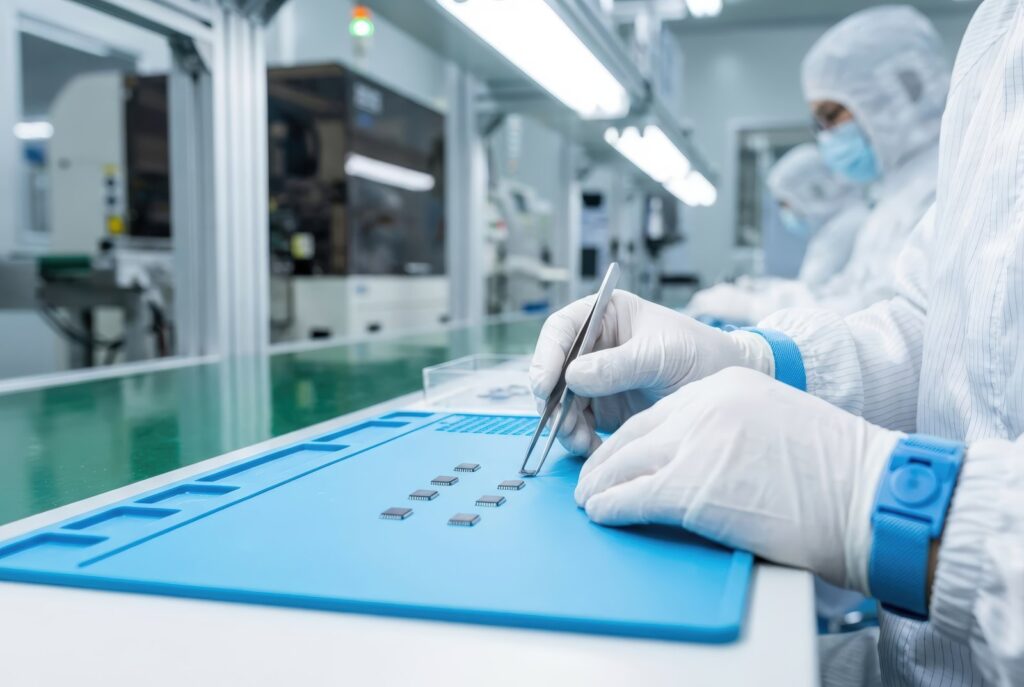
In semiconductor manufacturing, particles far smaller than the human eye can see can disrupt wafer fabrication and damage microelectronic components. Pharmaceutical and biotechnology facilities also rely on cleanroom environments to protect sterile production processes and maintain product safety. Even small contamination events can affect batch integrity, process consistency, or regulatory compliance.
Maintaining an industrial cleanroom requires careful management of several environmental factors, including:
- Airborne particulate levels
- Airflow patterns and pressure differentials
- Temperature and humidity stability
- Surface contamination on equipment and work areas
- Personnel contamination control through gowning and entry procedures
Because these environments operate continuously, maintaining strict contamination control is an ongoing responsibility. Even minor lapses in environmental management can introduce particles that affect production quality, disrupt sensitive manufacturing processes, or place additional strain on critical equipment.
Common Sources of Contamination in Industrial Cleanrooms
Although cleanroom environments are designed to control contamination, particles can still enter the space through several pathways. Even highly controlled facilities must account for contamination risks associated with normal operations, equipment use, and human activity.
Personnel Activity
Human activity is one of the most common sources of contamination in cleanroom environments. Movement within the space can release particles from clothing fibers, skin cells, and other microscopic materials. Even when protective garments are worn, personnel movement can introduce small amounts of particulate matter into the controlled environment.
Cleanroom protocols are designed to reduce these risks through structured gowning procedures, controlled entry points, and personnel training programs. These procedures help limit the number of particles released into the environment during routine operations. Maintaining strict operational discipline remains essential for preserving cleanroom conditions and minimizing contamination introduced through daily activity.
Equipment and Manufacturing Processes
Manufacturing equipment can also be a source of contamination in the cleanroom environment. Mechanical movement, lubrication systems, and automated material handling processes can generate particles that circulate within the controlled space.
In addition, some production processes naturally produce microscopic debris or residues that must be carefully managed. Without proper monitoring and maintenance, these particles can accumulate on equipment surfaces or become distributed through airflow systems within the cleanroom.

Routine inspection and cleaning help prevent equipment from contributing to contamination inside industrial cleanrooms. Mechanical components, lubrication systems, and production processes can generate particles that accumulate on equipment surfaces and nearby infrastructure. Regular maintenance removes these materials and helps identify contamination sources before they affect cleanroom conditions.
Airflow Disruptions
Cleanrooms rely on controlled airflow patterns to remove particles and maintain stable environmental conditions. Filtration systems continuously circulate clean air while directing contaminated air away from sensitive processes.
When airflow pathways become obstructed by equipment placement, debris, or infrastructure issues, airflow balance can be disrupted. Particles may accumulate in certain areas or remain suspended longer than intended. Maintaining clear airflow pathways helps filtration systems operate effectively and supports consistent cleanroom performance.
Materials and Equipment Control in an Industrial Cleanroom
Contamination in an industrial cleanroom can also originate from materials and equipment introduced into the environment. Packaging debris, manufacturing materials, and tool residues may carry particles that affect controlled conditions if not properly managed.
Facilities often implement strict material entry protocols to reduce these risks. Components entering the cleanroom are typically cleaned, wiped, or inspected before being brought into the controlled space. These procedures help limit the transfer of contaminants into sensitive manufacturing areas.
Equipment maintenance is another key aspect of contamination control. Mechanical systems can generate particles through friction, lubrication processes, or normal wear over time. Routine inspection and cleaning help prevent these systems from contributing to particle generation within the cleanroom environment.
Industrial Cleanroom Maintenance Best Practices
Contamination in industrial cleanrooms can originate from materials and equipment introduced into the environment. Packaging debris, manufacturing materials, and tool residues may carry particles that affect controlled conditions.
Facilities often use strict material entry protocols to manage this risk. Components are typically cleaned, wiped, or inspected before entering the cleanroom to limit the transfer of contaminants.
Equipment maintenance is also an important part of contamination control. Mechanical systems can generate particles through friction, lubrication, or normal wear, making routine inspection and cleaning essential for maintaining cleanroom conditions.
Environmental Monitoring and Compliance
Environmental monitoring helps ensure that industrial cleanrooms continue to meet contamination control standards required for high-tech manufacturing. Because these environments operate under strict regulatory expectations, monitoring programs confirm that particle levels remain within acceptable limits and that environmental conditions stay stable.
Typical monitoring activities include:
- Airborne particle testing
- Surface contamination testing
- Airflow velocity measurements
- Filtration system inspections
These measurements allow facility teams to detect contamination risks early and address potential issues before they affect manufacturing operations. Monitoring data also supports regulatory compliance and quality assurance documentation.
The Role of Preventative Maintenance in Cleanroom Performance
Preventative maintenance helps protect the systems that maintain cleanroom environmental conditions. Filtration units, airflow systems, and facility infrastructure must operate consistently to sustain contamination control.
Maintenance programs commonly include routine inspection of:
- Filtration systems
- Airflow pathways
- Cleanroom infrastructure and containment systems
Organizations responsible for mission-critical manufacturing environments often work with specialized service providers such as SET3 to maintain contamination control and environmental reliability.
Infrastructure Maintenance in an Industrial Cleanroom
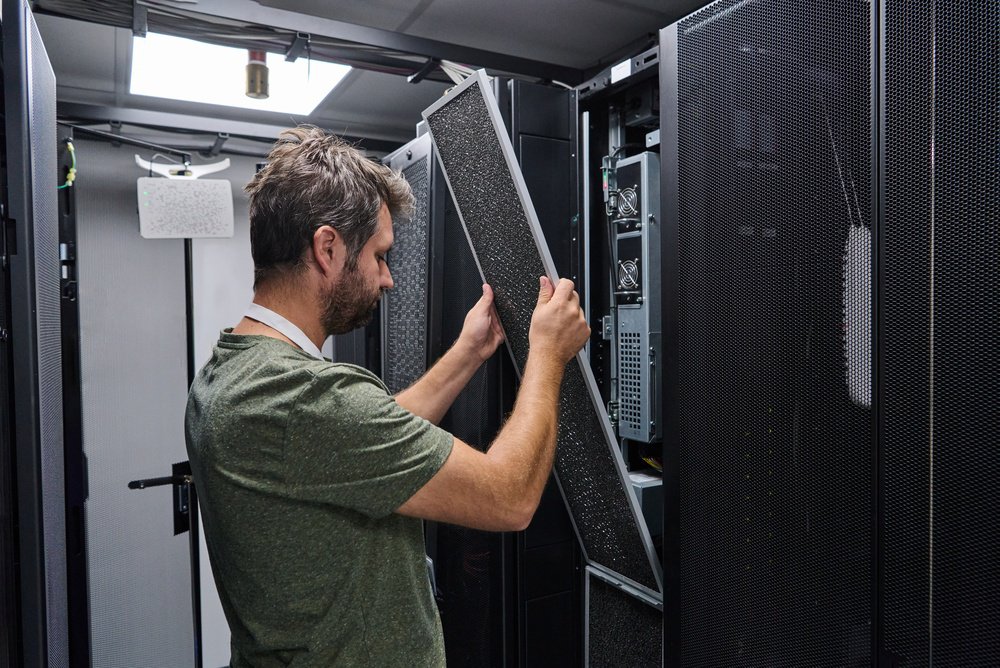
Maintaining an industrial cleanroom requires consistent attention to facility infrastructure. Filtration systems, airflow pathways, and containment barriers must operate reliably to maintain controlled environmental conditions.
High-efficiency particulate air (HEPA) filtration systems remove microscopic particles while supporting controlled airflow across the manufacturing space. Regular filter inspections help ensure particle removal efficiency remains within acceptable limits.
Facilities also inspect airflow pathways to confirm that equipment placement or infrastructure changes do not disrupt designed airflow patterns. Maintaining proper airflow distribution allows filtration systems to capture particles before they settle on sensitive equipment. Routine infrastructure maintenance supports ongoing contamination control within the cleanroom environment.

Continuous Improvement in Cleanroom Contamination Control
Maintaining an industrial cleanroom requires ongoing evaluation and adjustment as manufacturing technologies and operational demands evolve. Contamination control strategies must be reviewed regularly to ensure they remain effective.
Continuous improvement programs often include:
- Periodic review of cleaning procedures
- Evaluation of airflow system performance
- Assessment of personnel protocols and operational practices
- Analysis of environmental monitoring data
Monitoring data can reveal trends in particle levels or contamination patterns, allowing facilities to refine maintenance practices and strengthen environmental controls. Regular evaluation helps maintain stable, cleanroom conditions and supports high-precision manufacturing operations.
Supporting Long-Term Manufacturing Reliability
Industrial cleanroom environments support advanced manufacturing processes across many high-tech industries. Maintaining these controlled environments requires consistent monitoring, specialized cleaning procedures, and structured contamination control practices.
A well-managed cleanroom environment helps protect product quality and supports reliable manufacturing operations over time. Ongoing maintenance, environmental monitoring, and disciplined operational protocols are essential for sustaining the strict contamination control standards required in these facilities.
Organizations seeking guidance on cleanroom contamination control and environmental maintenance can connect with specialists at SET3 to discuss strategies for maintaining cleanroom infrastructure and controlled manufacturing environments.