Airflow efficiency is a fundamental requirement for maintaining stable operating conditions in data centers and other controlled infrastructure environments. As equipment density increases and cooling demands grow, facilities must manage airflow carefully to prevent temperature imbalances and protect sensitive hardware.
Many facilities use access flooring systems to distribute conditioned air through an underfloor plenum and deliver cooling directly to equipment racks. While the flooring system provides the airflow pathway, maintaining efficient cooling depends on how that airflow is controlled and directed throughout the environment.
Access flooring accessories play an important role in this process. When properly installed and maintained, these components help guide airflow beneath the floor, prevent cooling losses, and support more consistent cooling performance across the facility.
Access Flooring and Underfloor Airflow Management
Access flooring systems create an underfloor plenum that allows conditioned air to circulate throughout the facility and reach equipment racks. This design is widely used in data centers because it helps distribute cooling air where it is needed most.
Without proper airflow management, conditioned air can escape through open rack spaces, poorly managed cable cutouts, or gaps in infrastructure components. These inefficiencies can lead to uneven cooling distribution and localized hot spots. Proper access-floor management and airflow accessories help direct cooling air toward equipment intake areas, maintain consistent airflow patterns, and support efficient cooling performance across the facility.
Blanking Panels and Airflow Containment
Blanking panels are one of the most effective accessories for managing airflow within equipment racks. Installed in unused rack spaces, they prevent conditioned air from escaping through open gaps. Without blanking panels, cool air supplied through the access flooring plenum can bypass equipment and mix with hot exhaust air inside the rack, reducing cooling efficiency.
Sealing unused rack openings helps maintain proper airflow direction and supports consistent temperature distribution across equipment rows. By guiding airflow through active equipment and preserving separation between cold intake air and hot exhaust air, blanking panels improve overall cooling performance within the rack environment.
Perforated Tiles and Airflow Control in Access Flooring
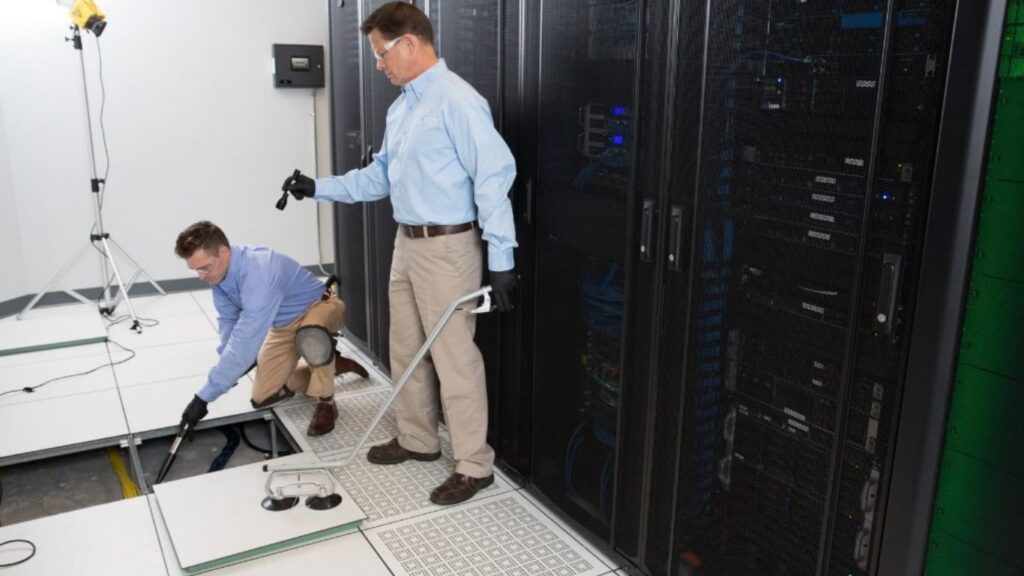
Perforated floor tiles help direct airflow in facilities that use access flooring systems. Their ventilation openings allow conditioned air from the underfloor plenum to rise into equipment areas, delivering cooling to racks that require additional airflow. When positioned correctly, these tiles help reduce temperature imbalances and improve cooling efficiency across the facility.
Improper placement can reduce airflow performance by allowing conditioned air to escape before reaching high-density equipment. Facility teams often evaluate airflow patterns beneath the floor to determine optimal tile placement. Positioning perforated tiles near high-heat equipment helps improve cooling distribution and minimize unnecessary airflow loss.
Managing Underfloor Air Distribution in Access Flooring Systems
Facility teams must keep airflow beneath access flooring unobstructed so conditioned air can reach cooling zones effectively. Infrastructure changes over time, including added cabling, equipment relocation, or facility upgrades, can introduce obstructions that disrupt these airflow pathways.
Cable congestion is a common cause of airflow disruption. Excess cabling can block vents and limit the flow of conditioned air to perforated floor tiles that cool equipment racks.
Routine maintenance practices, including subfloor cleaning and cable management, help remove debris and keep airflow pathways clear. Maintaining an organized underfloor environment supports consistent airflow performance and cooling efficiency.
Controlling Airflow Leakage in Access Flooring Environments
Air leakage can significantly reduce the efficiency of underfloor cooling systems, which forces cooling equipment to work harder. Even small gaps around cable openings, floor panels, or infrastructure penetrations can allow conditioned air to escape before reaching its intended destination.

When air leakage occurs, cooling systems must work harder to maintain temperature stability inside the facility. This increases energy consumption and may lead to uneven temperature distribution across equipment racks.
Facilities often address these issues through infrastructure inspections and targeted airflow management improvements. In many cases, technicians also perform critical environment cleaning solutions to maintain clean airflow pathways and reduce contamination risks that could affect airflow systems.
Maintaining Airflow Through Infrastructure Maintenance
Maintaining efficient access flooring systems requires consistent oversight of the condition of the infrastructure. Regular inspections help confirm that floor panels remain properly aligned and that airflow pathways beneath the floor remain unobstructed.
Facility teams commonly inspect:
- Floor panel alignment
- Airflow tile placement
- Cable routing pathways
- Airflow containment components
These inspections help ensure that access flooring systems continue to support proper cooling distribution across the facility. Routine maintenance and infrastructure assessments help maintain stable environmental conditions and reliable airflow performance.
Monitoring Airflow Performance in Access Flooring Systems
Maintaining efficient airflow within access flooring systems requires continuous monitoring and evaluation. As infrastructure changes over time, airflow patterns beneath the floor may shift, affecting cooling performance.
Facility teams often review airflow performance using temperature-monitoring systems and airflow-measurement tools. These tools help identify areas where airflow distribution may be insufficient.
When airflow issues are detected, facility managers can adjust airflow tile placement, rack containment strategies, or cable routing beneath the floor.
Regular inspections of the underfloor environment also help ensure that debris or cable congestion does not obstruct airflow pathways. Facilities sometimes schedule maintenance services, such as subfloor cleaning, to keep airflow channels beneath access flooring systems clear.
Supporting Long-Term Cooling Efficiency
Efficient airflow management is essential for maintaining stable operating conditions in high-density infrastructure environments. Access flooring systems help distribute cooling air, but their performance depends on proper accessory use and consistent maintenance.
Accessories such as blanking panels control airflow within equipment racks, while routine inspections keep airflow pathways beneath the floor clear. These practices support balanced cooling distribution and help prevent overheating.
To improve airflow efficiency and maintain stable environmental conditions, connect with SET3 to discuss access-floor maintenance and airflow-optimization strategies for your facility.