
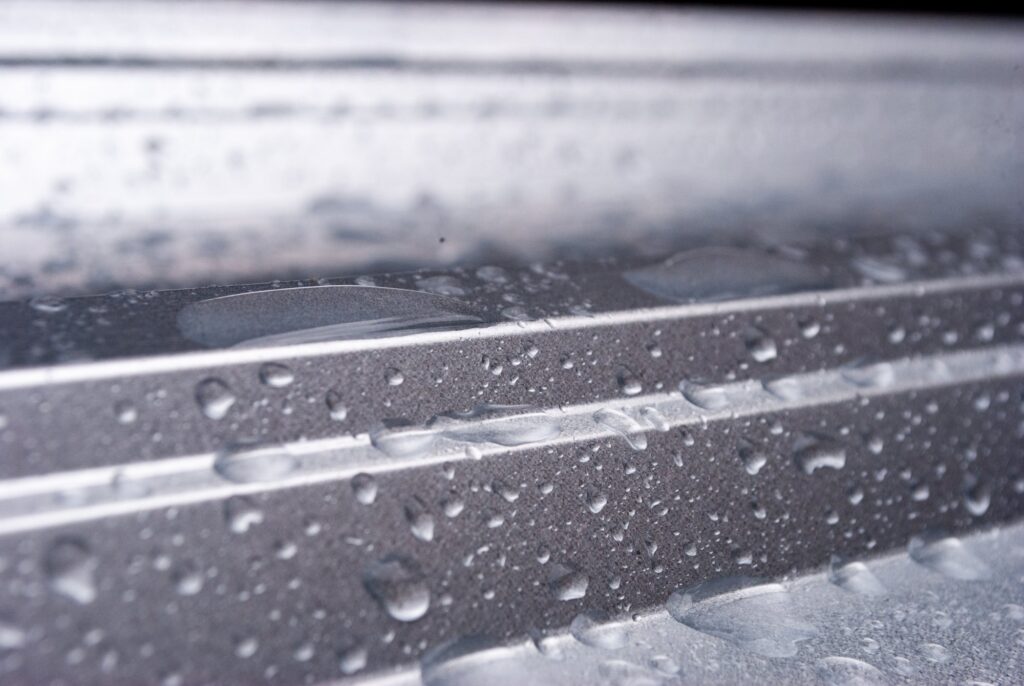
If you’re seeing rust or corrosion around a Computer Room Air Conditioning (CRAC) unit, treat it as more than a cosmetic issue. Corrosion under a raised access floor can create conductive debris that travels on airflow, and it can quietly reduce pedestal strength right where modern high-density racks need the most support. The right response starts with diagnosing the moisture source, then controlling particle release during cleanup, then restoring floor alignment and structure.
This article covers why corrosion often clusters around CRAC units, what it can do to hardware and load capacity, and a practical remediation path that works in live environments.
Why Corrosion Clusters Around Crac Units
Rust near a CRAC unit is usually a symptom of one (or more) environmental failures:
- Condensation spikes
- Humidifier leaks and drain issues
- Improper cleaning around the unit
1) Condensation Spikes
If internal dehumidification isn’t behaving as intended (or setpoints are overly aggressive) cold surfaces can drive condensation on nearby metal. Underfloor pedestals and stringers are common victims because they sit in the airflow path and can stay cooler than surrounding surfaces.
2) Humidifier Leaks and Drain Issues
Many CRAC units use internal humidification. A small leak in a supply line, a cracked drain pan, or a partially blocked drain can wet the slab below the unit. Water then “wicks” upward into pedestals and hardware, turning a small leak into a spreading corrosion zone.
3) Improper Cleaning Around the Unit
High-traffic areas near CRAC units often get extra attention from general janitorial teams. The problem is water. Excessive wet mopping can push moisture into floor seams. In a pressurized plenum, that moisture can stay trapped against metal components long enough to start corrosion.
The Danger: Rust Flakes Become Airborne, Conductive Dust
Corroding metal doesn’t stay intact; it delaminates. Iron oxide flakes can break free and get lifted into the air stream, especially near a CRAC where velocities and turbulence are higher.
What That Can Mean for Your Room
- Electrical risk: Rust flakes and metal particulates can be conductive. If they enter server intakes, they may settle on boards or power components and bridge gaps; sometimes showing up later as intermittent faults, sometimes as immediate shorts.
- Load-bearing risk: Corrosion also attacks structural integrity. A degraded pedestal is no longer a known quantity. In dense environments, that’s a serious safety and uptime concern because point loads are higher and racks are less forgiving of uneven support.
What to Do Now: A Remediation Hierarchy for Crac-Area Corrosion
Start with a controlled sequence. The goal is to fix the cause and prevent particle release while you work.
Step 1: Identify the Moisture Source
- Inspect CRAC drain lines, pans, valves, and humidifier supply/drain components.
- Check for standing water or staining on the slab under the unit.
- Use a moisture meter on the concrete slab and adjacent pedestals to confirm whether moisture is present and how far it spreads.

Step 2: Decide Between Surface Treatment and Replacement
Not all rust means replacement, but you need a clear threshold.
- If it’s surface “bloom” only: A data-center-approved, non-conductive rust inhibitor may be appropriate.
- If you see pitting, scaling, or thinning at the pedestal neck/stringers: Replace the affected components. Structural sections that have lost material should not stay in service under modern rack loads.
Important method note: Do not wire-brush or sand corroded metal in a live room. Mechanical abrasion can release large quantities of conductive debris into the airflow.
Step 3: Perform Technical Subfloor Decontamination
Standard vacuums and casual wipe-downs won’t capture the fine particulate fraction that matters most.
- Use HEPA/ULPA-grade vacuuming and controlled tools for the understructure details (pedestal bases, stringer interfaces, corners, and seams).
- Capture and remove loose oxide before it can migrate.
When Corrosion Is Present, Check Alignment: Access Floor Tuning
Corrosion often shows up alongside “rocking” tiles, pedestal drift, and micro-movement. Misalignment creates grinding at interfaces, which creates more dust and worsens wear.
Access Floor Tuning typically includes:
- Re-leveling: Adjusting pedestals so the finished floor is flat and stable, reducing movement that generates particulate.
- Stringer replacement: Swapping corroded galvanized components for new coated parts that resist moisture better.
- Encapsulation/sealing (where appropriate): Applying anti-static, moisture-mitigating sealants to reduce concrete dusting and slow future wicking.
Quick Guide: Symptoms and Likely Next Step
For a quick diagnosis and to determine the proper steps, take a look at this table for reference. Start with the symptoms, then the probable cause, all the way to the next step to take.
| What You See Near the CRAC | Likely Issue | Practical Next Step |
|---|---|---|
| Light rust staining, no pitting | Surface bloom from moisture exposure | Source fix + inhibitor + controlled particulate removal |
| Flaking oxide, rust dust trails | Active delamination and migration | Technical subfloor decon + component evaluation |
| Pitted pedestals/stringers | Material loss | Replace affected components + re-leveling |
| Rocking tiles or gaps | Misalignment/grid movement | Access floor tuning + hardware checks |
Cleaning best practices around CRAC units
When you’re dealing with rust around a CRAC, the method matters as much as the product. For daily upkeep around the unit, a low-lint damp microfiber with a pH-neutral, anti-static cleaner works well because it grabs heavier particles instead of pushing them into seams.
For the rust itself, we use controlled extraction so oxidation is removed without flakes escaping into the CRAC intake. The vacuum is the separator; if you aren’t using a certified HEPA/ULPA system with non-conductive tooling, you’re shifting contamination from the floor to the motherboard.
Where SET3 Fits
SET3 supports critical environments with controlled cleaning, decontamination, and environmental testing. When corrosion shows up near CRAC units, the work usually needs three things in one scope:
- Find and correct the moisture driver
- Remove corrosion byproducts without spreading conductive debris
- Validate the environment afterward with particle counting aligned to ISO 14644-1 expectations
Clean Out Rust and Corrosion Around Crac Units With SET3
If you’ve found rust or corrosion around a CRAC unit and need a live-site plan that addresses root cause, underfloor decontamination, and post-work verification, talk with SET3 about an assessment and remediation scope.